
Is Forex Trading Halal or Haram? Islamic Views Explained
Is forex trading halal or haram? 📈 Discover Islamic viewpoints, conditions for permissibility, and how Pakistani Muslims can trade within Shariah guidelines.
Edited By
George Mitchell
Forex trading, or foreign exchange trading, involves exchanging different currencies on a global platform. In Pakistan, many are drawn to forex due to its accessibility and potential gains. However, the core question is whether this form of trading aligns with Islamic principles—specifically, if it is halal (permissible) or haram (forbidden).
Islamic finance is governed by Shariah law, which prohibits interest (riba), excessive uncertainty (gharar), and gambling (maysir). To understand if forex trading fits these guidelines, we first need to examine how this market operates.
Forex trading generally includes speculation on currency price movements. Traders buy one currency and sell another, aiming to profit from fluctuations. The market runs 24/7, with rapid and high-volume trades occurring globally. This raises concerns about whether such speculative behaviour involves elements of gambling or unfair practices.
Islamic scholars highlight three key considerations when judging forex trading:
Immediate exchange: Both currencies must be exchanged on the spot without delay.
Absence of interest: Trades should not involve any interest-based financing.
Reduced uncertainty: Transactions should avoid excessive ambiguity or risk that resembles gambling.
Some scholars argue that spot forex trading, where currencies exchange on the spot without delay, is halal if conducted without interest or speculation akin to gambling. Others caution against leveraged trading and deferred settlements, which may involve interest and higher risk.
For Pakistani investors, it is important to choose forex platforms that offer Islamic trading accounts. These accounts typically avoid interest (swap-free) and comply with Shariah principles. Services like these help traders remain within halal boundaries while participating in the forex market.
In summary, forex trading itself isn’t outright haram or halal. The permissibility hinges on how trades are executed, whether interest or gambling elements are involved, and if risk is managed responsibly. Understanding these nuances helps Pakistani traders make informed decisions aligned with Islamic teachings.
Understanding the basics of forex trading is essential before considering its compliance with Islamic principles. Forex trading involves exchanging one currency for another and has grown into a massive global market with daily transactions exceeding $6 trillion. This section breaks down the mechanics of forex trading, highlighting key elements that affect its permissibility in Shariah.
Forex trading means buying one currency and selling another simultaneously. For example, if you buy USD/PKR, you are purchasing US Dollars while selling Pakistani Rupees. The value depends on supply and demand, geopolitical events, and economic indicators. Currency exchange itself is a normal part of trade—for instance, when you travel abroad or import goods, you exchange currencies. This practical aspect forms the foundation of forex trading.
Forex markets run 24 hours a day across different time zones, allowing continuous currency trading. Major centres include London, New York, Tokyo, and Sydney. Unlike a stock exchange, forex does not have a centralised marketplace. Instead, it operates via a network of banks, brokers, and electronic platforms. This global reach means currencies are traded in real-time, reflecting worldwide economic conditions.
Speculation is a key part of forex trading where traders try to profit from currency price movements rather than using currencies for actual transactions. Traders sometimes use leverage, borrowing funds to increase potential returns. For example, with 1:100 leverage, Rs 10,000 can control Rs 1,000,000 worth of currency. While this can magnify gains, it also increases risks, leading to larger losses quickly.
Spot transactions refer to immediate exchange of currencies, typically settled within two days. This form closely resembles physical currency trading and aligns with the hand-to-hand exchange principle in Islamic finance. On the other hand, derivatives like futures or options are contracts based on currency prices but settled later or without actual exchange. These involve more uncertainty (gharar) and speculation, raising concerns about their permissibility.
Knowing these forex basics helps traders make informed decisions regarding which trading methods fit within Islamic guidelines.
Understanding the structure and practices of forex trading lays the groundwork for analysing its halal or haram status. Pakistani traders should pay attention to how these practices align with Islamic finance principles to avoid inadvertent violations.
Islamic finance lays down clear rules that help determine whether any financial activity aligns with Shariah law. When it comes to forex trading, these principles become the foundation for deciding if it is halal (permissible) or haram (forbidden). Traders in Pakistan and beyond must understand key prohibitions and conditions that refer directly to how money is exchanged and earned.
Islamic finance prohibits certain elements in trade that go against ethical and religious values. For example, dealings involving gambling (maysir), dishonesty, or unfair advantage are strictly forbidden. This ensures that transactions are fair and transparent. For forex traders, this means avoiding practices that resemble gambling or excessive speculation which may lead to unjust enrichment.
Two of the most significant factors are riba (interest) and gharar (uncertainty). Riba is completely prohibited in Islam, as it involves earning money from money without any productive activity. In forex, if a trader pays or receives interest due to delayed settlement or leverage, this would breach the no-riba rule. Similarly, gharar revolves around excessive uncertainty or ambiguity in contracts. Since forex markets may involve unpredictable price swings and complex derivatives, understanding these risks helps traders avoid transactions ridden with prohibited uncertainty.
Shariah law sets distinct conditions for lawful currency trading. One major requirement is that currencies exchanged must be done so at spot value — meaning immediate and actual exchange of the currencies at the time of transaction. This prevents any form of deferred payment or delayed settlement which could involve riba or gharar. For instance, buying US dollars today with Pak Rupees must be finalised hand-to-hand without postponement.
This brings us to the principle of instant hand-to-hand exchange or sarf. This principle insists that when exchanging currencies, both parties must settle the trade instantly, exchanging the actual currencies on the spot. There should be no delay in the transfer, whether physical or electronic. This principle is critical in forex because it distinguishes lawful transactions from those involving credit or deferred settlements, which Islam forbids. By following sarf, traders ensure their forex dealings remain Shariah-compliant.
Traders should take care to confirm immediate settlement in their trading platform to adhere to sarf and avoid transactions with hidden interest or deferred payments.
Understanding these Islamic finance principles helps Pakistani traders navigate the forex market within religious boundaries, making informed decisions that respect both their faith and financial goals.
When evaluating whether forex trading is halal or haram, the opinions of Islamic scholars carry significant weight. These views guide traders, especially in Pakistan, where following Shariah-compliant practices is a priority. Scholars examine how forex trading aligns with core principles of Islamic finance such as the prohibition of riba (interest), gharar (excessive uncertainty), and maysir (gambling). Understanding these perspectives helps ensure your trading methods respect Islamic ethics and avoid religious conflicts.
Some scholars declare forex trading haram mainly due to its association with riba and gharar. The most common concern lies with the use of leverage — borrowing money to increase exposure — which often involves paying or receiving interest. This directly contradicts the ban on riba, making trading with leverage a non-compliant activity in Islamic terms. For example, many conventional brokers offer leveraged accounts that charge overnight swap fees, considered interest in Islam.
Another reason is the speculative nature of forex trading. When traders bet on currency movements without actual ownership or immediate exchange, it leads to gharar—uncertainty bordering on gambling. This excessive speculation can result in unfair gain and loss, which Islamic law seeks to prevent. Considering many retail traders enter the market hoping for quick profits without tangible economic activity, scholars caution against such speculative dealings.
On the other hand, some scholars accept forex trading as halal, provided certain conditions are met. Key among these is the requirement for sarf, or immediate hand-to-hand exchange of currencies without delay or interest. This means trades should be settled instantly, without involving deferred payments or rollovers that attract riba. If such terms are honoured, forex trading aligns with Shariah principles.
Islamic finance-compliant platforms offer swap-free accounts, removing interest fees and focusing purely on currency exchange based on real economic transactions. For instance, if you buy euros with dollars and settle the exchange immediately on a broker's Islamic account, this transaction can be viewed as halal. This shows that not all forex trading is inherently impermissible—how and on which terms you trade matters most.
Understanding these perspectives helps Pakistani traders make informed choices, especially when selecting brokers and designing their trading strategies. Compliance with Islamic law does not outright forbid forex trading; it demands careful structuring to avoid interest, speculation, and uncertainty.
Understanding how to trade forex in line with Shariah is necessary for Muslims who want to invest but avoid engaging in actions considered haram. This section highlights practical steps and considerations that ensure forex activities comply with Islamic rules, especially around interest (riba) and uncertainty (gharar).
Trading without leverage is key because traditional forex leverage involves borrowing money and paying interest, which goes against Shariah principles. Instead, a trader should use their own capital only, avoiding any form of borrowing or margin trading. For instance, if you have Rs 1 lakh to invest, trade within that limit without borrowing more. This reduces both the risk of debt and exposure to interest payments commonly built into leveraged trades.
Quick settlement requirements come from the Islamic rule that currency exchange must happen hand-to-hand without delay. Delayed settlements introduce gharar by increasing uncertainty and can push trades into the realm of speculation. Thus, traders should prefer spot forex trades where the transaction settles immediately rather than holding positions for days or rolling contracts, which often lead to interest charges.
When selecting brokers, look for features that avoid interest and comply with instant settlement rules. Important aspects include:
Islamic (swap-free) accounts that do not charge overnight rollover interest
Transparent fee structures free from hidden costs or commissions linked to interest
Immediate execution of trades without delay in ownership transfer
Such brokers facilitate trading aligned with Islamic ethics. For example, many global forex platforms now offer Islamic accounts tailored to Muslim traders. Examples of Islamic forex accounts include those offered by platforms like XM, FXTM, and Pepperstone, which allow trading without swap fees.
Islamic forex accounts not only remove interest charges but also provide clear terms on spreads and commissions, ensuring no hidden riba. They often have stricter compliance controls, helping traders avoid forbidden practices. Pakistani traders should verify that their chosen platform follows Shariah guidelines before investing, as not all brokers labelled Islamic meet all criteria.
Engaging in forex trading under Shariah requires avoiding leverage and delayed settlements, plus choosing the right platform with swap-free accounts to keep trading halal.
Following these guidelines helps Muslim traders manage forex investments confidently within Islamic law, protecting both their capital and faith.
When Pakistani traders approach forex trading, practical issues like legal regulations and financial risks play a big role alongside religious concerns. Understanding Pakistan’s regulatory framework and market conditions helps traders navigate forex more confidently, ensuring compliance with both Shariah and local laws. These considerations are vital because they affect not just the legality and Islamic permissibility but also the trader’s real chances of profit or loss.
The State Bank of Pakistan (SBP) regulates all forex dealings within the country to maintain economic stability. SBP guidelines strictly forbid Pakistani residents from operating foreign currency accounts abroad without permission, and it limits currency exchange to recognised financial institutions and brokers. For traders, this means they must ensure their forex activities comply with SBP rules to avoid legal issues. Using authorised channels minimises the risk of penalties or account freezes.
The Federal Board of Revenue (FBR) also oversees taxation of forex profits in Pakistan. All gains from forex trading are subject to income tax under the Pakistan Income Tax Ordinance. Traders must maintain clear records of their transactions and report any profits earned through forex to avoid legal trouble. Failure to declare forex income can lead to fines and audits. For example, if someone earns Rs 5 lakh profit from forex trades in a tax year, this amount should be included in the annual tax return to comply with FBR regulations.
Pakistan’s forex market is highly volatile and can shift rapidly due to economic and geopolitical factors. Traders face the risk of losing significant capital if market movements are unfavourable. Sudden rupee depreciation or geopolitical tensions can cause price swings that catch unprepared traders off guard. For instance, during times of loadshedding or political unrest, the forex market might see sharp fluctuations, increasing risk.
On the other hand, forex trading provides an opportunity to earn income while respecting Islamic principles if done correctly. By avoiding interest-based accounts and ensuring each transaction has immediate settlement, traders can engage in halal forex. Many Pakistani traders manage to generate extra income through disciplined strategies aligned with Shariah.
Practical knowledge of legal requirements and market behaviour helps Pakistani traders make informed decisions. This reduces the risk of conflicts with both the law and Islamic teachings while increasing success prospects.
In summary, success in forex trading for Pakistani traders depends not just on compliant practices but also on understanding local laws, tax obligations, and market volatility. Being well-informed provides a solid foundation for trading within Islamic guidelines.
Is forex trading halal or haram? 📈 Discover Islamic viewpoints, conditions for permissibility, and how Pakistani Muslims can trade within Shariah guidelines.
Explore whether binary trading aligns with Islamic finance principles 🚦 Understand risks, scholar views, and guidance for Pakistani investors seeking halal options in trading.

Explore top forex trading courses in Karachi 📈 Learn course details, practical training, cost, and expert tips to boost your trading skills safely in Pakistan's market.
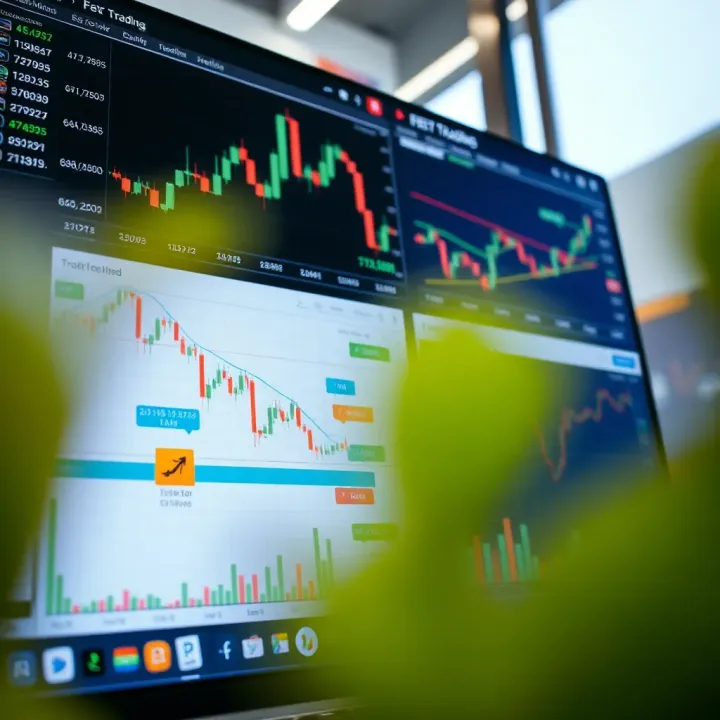
🔍 Find the best forex trading platform for Pakistani traders! Compare features, costs, security, and regulations to trade smart and safe in Pakistan's market.
Based on 6 reviews