
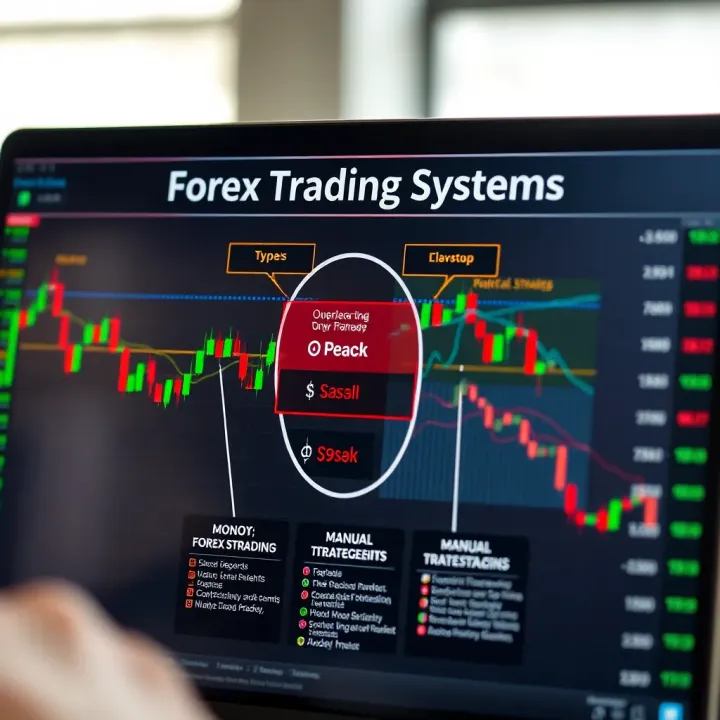
Forex Trading Systems: A Practical Guide for Pakistani Traders
Explore forex trading systems for Pakistani traders 🇵🇰 Learn types, selection tips, practical steps, and risk management to trade currencies with confidence and care 📈
Edited By
Amelia Foster
Forex trading has grown steadily in Pakistan as people seek new ways to invest and earn in the foreign exchange market. However, before diving into trading global currencies, understanding what a forex trading account is becomes essential.
A forex trading account is similar to a bank account but is used exclusively to buy and sell foreign currencies online. This account allows you to access the forex market through a broker. Without it, you cannot participate in currency trading. For Pakistani traders, selecting the right type of forex account can impact trading costs, available features, and leverage options.

Typically, brokers offer several types of forex accounts:
Standard Account: Suitable for more experienced traders, with higher minimum deposit requirements and variable spreads.
Mini or Micro Account: Designed for beginners or those with limited capital; these accounts allow smaller trade sizes with lower deposit amounts.
Islamic Account: Follows Shariah law by avoiding interest (swap) charges during overnight positions, catering to Pakistani Muslim traders.
When choosing a forex trading account, check if the broker is regulated or authorised by recognised international bodies. For Pakistan, brokers regulated by the Securities and Exchange Commission of Pakistan (SECP) or those with a good reputation internationally are safer choices.
Opening a forex account requires completing registration documents, submitting a valid CNIC (Computerised National Identity Card), and sometimes bank proof for deposits. Pakistani traders must also be aware of regulatory restrictions around forex trading and always use reliable payment methods such as JazzCash, Easypaisa, or bank transfers.
By understanding the different account types and regulatory compliance, traders can manage risks better and make more informed choices. In the sections ahead, you will learn how to set up a forex trading account step-by-step, what factors to consider, and how to manage your trades within Pakistan’s market environment.
Forex trading accounts are your personal gateway to the foreign exchange market, where currencies like the US dollar, euro, and Pakistani rupee are traded. Having a clear understanding of these accounts helps traders in Pakistan avoid common beginner mistakes and manage their investments more effectively. For example, a trader who starts with the right account type can better handle risks linked to leverage and market volatility.
A forex trading account is essentially an agreement between you and a licensed broker to buy and sell currencies. It holds the funds you use for trading and records each transaction you make. The main purpose of this account is to provide a platform where you can access live currency prices and execute trades instantly. Without an account, participation in forex trading isn’t possible. Think of it like a bank account dedicated solely to trading currencies.
Once you open a forex trading account, you deposit capital—usually in either US dollars or Pakistani rupees depending on the broker. You then use this capital to trade currency pairs through the broker’s platform. Each trade’s profit or loss directly affects your account balance. Brokers offer different features such as leverage, which lets you control a larger position than your actual capital. For example, if your account has Rs 50,000 and the broker offers 1:100 leverage, you can trade currency amounts worth Rs 5 million.
The broker also provides live price feeds, order execution, and access to trading tools. Your account keeps track of all these activities, making it easy for you to monitor and adjust your strategies. To sum up, a forex trading account is like the cockpit from where you control your trades — understanding its workings is the first key step for any serious trader in Pakistan.
Choosing the right type of forex trading account is essential for Pakistani traders. The account type affects your trading experience, investment size, risk level, and costs. Brokers generally offer three main account types tailored to different needs and trading styles.
Standard accounts are the most common option and suitable for traders with reasonable capital and experience. Typically, one standard lot equals 100,000 units of the base currency, meaning this account involves larger trade sizes. For example, if you trade USD/PKR, one standard lot would be 100,000 USD.
These accounts offer competitive spreads and lower per-unit trading costs but require higher minimum deposits, usually starting from around $1,000 (approximately Rs 3 lakh). They’re ideal if you aim for significant profits and can handle the exposure that comes with larger positions. Many Pakistani traders use standard accounts once they gain confidence beyond the demo or micro stages.
Mini and micro accounts cater to beginners or those who prefer trading smaller volumes. A mini lot equals 10,000 units and a micro lot 1,000 units of the base currency, making it easier to manage risks. For instance, trading a micro lot of USD/PKR means handling just 1,000 USD, which reduces the margin requirements substantially.
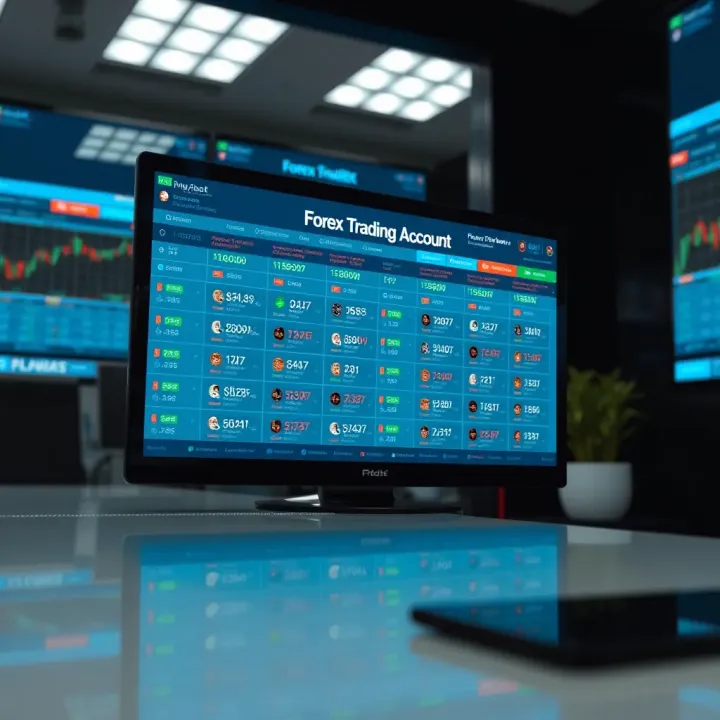
These accounts require much lower initial deposits, often as low as $10-$50. Lower trade sizes mean you can test strategies and learn how the market moves without risking large sums. Pakistani traders starting with micro accounts can avoid heavy losses while building skills, especially since market volatility can be quite high with emerging currencies.
Micro and mini accounts provide a practical entry point for traders with limited capital or those cautious about exposure, making them an excellent choice for new forex investors in Pakistan.
Islamic or swap-free accounts comply with Shariah law by eliminating interest (swap) charges on overnight positions. Since charging or paying interest is prohibited in Islam, these accounts adjust the broker’s fees differently to ensure compliance.
Pakistani Muslim traders who avoid conventional interest-bearing products prefer these accounts. Brokers licensed for Pakistani traders often provide this option so clients can trade without conflicting with their religious principles.
While Islamic accounts do not charge swaps, they might have slightly higher spreads or fixed commissions to compensate. Choosing such an account ensures you can trade forex comfortably without violating religious guidelines.
Selecting the right account type depends on your trading capital, experience, and religious considerations. Whether you choose standard, mini or Islamic accounts, understanding these fundamentals helps set realistic expectations and improved risk management in your forex trading journey.
Starting a forex trading account in Pakistan is your first step towards accessing the global currency market. This process is especially significant given the increasing interest of Pakistani traders in foreign exchange due to rupee volatility and opportunities to diversify income streams. Choosing the right broker and understanding the registration steps can make a real difference in your trading experience and security.
When picking a broker, always look for one licensed by recognised international authorities, such as FCA (Financial Conduct Authority) or CySEC (Cyprus Securities and Exchange Commission), which accept Pakistani traders. A broker authorised for Pakistan ensures compliance with local regulations and sometimes offers account support in PKR. For example, brokers like IG Markets or XM provide services tailored to South Asian clients, including options to deposit through popular Pakistani payment systems like JazzCash or Easypaisa.
To open a forex account, you usually need to provide your Computerised National Identity Card (CNIC), proof of address, and sometimes a recent utility bill, such as a WAPDA or Sui gas bill. Verification processes comply with Anti-Money Laundering (AML) and Know Your Customer (KYC) rules. For instance, a clear photo of your CNIC and a scanned copy of your electricity bill dated within the last three months are typical requirements. This protects both you and the broker against fraudulent activities.
Most brokers offer an online application form where you'll enter your personal details, trading experience, and financial information. Then, you'll upload your verification documents. Some platforms require an initial questionnaire to assess your understanding of forex risks. Upon successful submission, you receive account credentials and can log into the trading platform. Always check whether the site supports Urdu or English to ensure smooth communication.
After setting up your account, the next step is funding. Pakistani traders benefit from brokers supporting local bank transfers and mobile wallets like Easypaisa or JazzCash, which save exchange fees and speed up deposits. For example, if you transfer Rs 50,000 from your HBL account or via Easypaisa, the amount should reflect quickly in your forex account due to partnerships between brokers and local financial services. Check minimum deposit amounts, which commonly start at Rs 10,000 or equivalent in USD.
Opening a forex account with a licensed broker and understanding the paperwork and funding options can save you troubles and build a strong foundation for trading success.
By following these steps, Pakistani traders can confidently begin their forex trading journey while managing risk and complying with local guidelines.
Understanding the main features and costs of forex trading accounts is essential for Pakistani traders to manage their investments effectively. These elements directly affect your profitability and trading experience. Let's break down the crucial parts you should know.
Spreads represent the difference between the buying and selling price of a currency pair. In most forex accounts, brokers profit from this spread. For example, if the EUR/USD pair has a spread of 2 pips, you effectively start with a 2-pip loss until the price moves in your favour. Brokers typically offer fixed or variable spreads. Fixed spreads stay the same regardless of market conditions, useful during volatile times, while variable spreads change, often narrowing during calm market hours.
Apart from spreads, some brokers charge commissions per trade, especially on accounts offering tighter spreads. For instance, a standard account might have a 1.5 pip spread with no commission, while a professional account could offer 0.5 pip spread plus a commission of $5 per lot traded. For Pakistani traders, always check if commissions or wider spreads align better with your trading style and capital.
Leverage lets you control a larger position with a smaller deposit, amplifying your potential gains or losses. Common leverage ratios range between 1:50 and 1:500, but Pakistani traders should be cautious. For example, $100 with 1:100 leverage can control $10,000 worth of currency. While this boosts earnings potential, it also increases risk significantly.
Margin is the amount you must keep in your account to open or maintain a position. Suppose you want to buy USD/PKR worth $1,000 with 1:100 leverage; your margin requirement would be $10. If your account equity drops below margin requirements, brokers may issue a margin call asking for additional funds to keep positions open, or automatically close losing trades to protect both you and themselves.
Understanding these terms lets you handle risks better and avoid sudden account losses.
The choice of trading platform can make or break your trading experience. Popular platforms like MetaTrader 4 (MT4) and MetaTrader 5 (MT5) offer user-friendly interfaces, a wide range of technical indicators, automated trading via Expert Advisors (EAs), and mobile app compatibility.
Pakistani traders often prefer MT4 for its simplicity and wide broker support. Besides charts and analysis tools, many platforms provide risk management features like stop loss, take profit orders, and real-time news feeds. Some brokers also offer proprietary platforms with unique tools, but it's crucial to ensure these are reliable and suited to your trading style.
Careful attention to spreads, leverage, and platform tools helps improve your chances of consistent gains and minimises unexpected costs or risks. Check these details before opening an account.
Through these features, Pakistani forex traders can navigate the market more confidently, controlling costs while maximising opportunities within their risk tolerance.
Managing risks is fundamental when trading forex, especially for Pakistani traders navigating volatile markets and rupee fluctuations. Without proper risk management, even experienced traders can face significant losses quickly. This section focuses on practical strategies that help protect your trading capital and improve your chances of making consistent profits.
Stop loss and take profit orders are essential tools to control losses and secure gains automatically. A stop loss order closes your position when the price hits a predefined level, preventing runaway losses during sudden market swings. For example, if you buy USD/PKR at Rs 280 and set a stop loss at Rs 275, your trade automatically exits if the price dips, limiting your loss to Rs 5 per unit.
Take profit works the opposite way—it locks in profits by closing a position when a target price is reached. Setting a take profit order near recent resistance levels helps ensure your earnings before the market reverses. Using these orders removes emotion from trading and ensures disciplined money management.
Margin calls occur when your trading losses approach the margin you’ve put up, prompting your broker to ask for more funds or to close positions. Understanding margin calls helps you prevent unexpected account wipeouts. For instance, if you trade with 1:100 leverage on Rs 10,000 margin, your position size equals Rs 1,000,000. A small 1% adverse move can wipe out your margin.
To protect your account, avoid over-leveraging beyond your risk tolerance. Brokers regulated for Pakistani traders often provide negative balance protection, meaning you won’t owe more than your deposited amount. Still, keep an eye on your margin level and maintain extra funds in your account to withstand market fluctuations.
Demo accounts let you trade with virtual money, mirroring real market conditions without risking your capital. They are vital for Pakistani traders, especially beginners, to understand how forex accounts function, test strategies, and get familiar with trading platforms like MetaTrader 4 or 5.
Practising on a demo account helps you learn the effects of leverage, spreads, and order types firsthand. For example, by simulating trades during volatile sessions such as following SBP monetary announcements, you can observe market reactions safely. Once comfortable, transition gradually to live accounts, starting with smaller stakes to manage real risk effectively.
Consistent risk management transforms forex trading from gambling to a strategic investment. Use stop loss and take profit orders, respect margin limits, and refine skills on demo accounts before committing your funds.
By applying these practical risk control methods, Pakistani traders can safeguard their forex accounts and build a disciplined approach to trading in the PKR currency market.
Explore forex trading systems for Pakistani traders 🇵🇰 Learn types, selection tips, practical steps, and risk management to trade currencies with confidence and care 📈
📈 A detailed forex trading guide for Pakistani traders covering market basics, key concepts, risk management, and tips on using PDF resources effectively to learn smartly.

📊 Explore top trading apps worldwide with a focus on Pakistan. Compare fees, security, tools, and support to find the best option for your trading needs.
🔍 Find the best forex trading platform for Pakistani traders! Compare features, costs, security, and regulations to trade smart and safe in Pakistan's market.
Based on 12 reviews