
Best Trading Apps for Traders in Pakistan
📊 Explore top trading apps worldwide with a focus on Pakistan. Compare fees, security, tools, and support to find the best option for your trading needs.
Edited By
Amelia Watson
Forex trading appeals to many in Pakistan as a way to engage with global markets directly from home. Yet, without a clear understanding of its basics and a good learning strategy, it can quickly lead to losses instead of gains. This guide helps you navigate forex trading practically, focusing especially on how to use PDF resources effectively for your learning journey.
Forex trading means buying one currency while simultaneously selling another. Traders profit by speculating on currency value changes. In Pakistan, popular currency pairs often include USD/PKR, EUR/USD, and GBP/USD because they reflect the rupee's volatility against major world currencies.
Successful trading depends as much on knowledge and discipline as on timing and luck.
Understanding fundamental concepts like pips, leverage, margin, and spread is vital before risking your capital. For instance, leverage allows you to control a larger position with a smaller amount, but it raises risks alongside potential rewards. PDFs from respected sources provide concise explanations of these topics, often with examples and charts to help solidify your grasp.
Starting with PDFs offers several advantages:
Easily accessible offline, perfect for studying during commutes or power outages.
Well-structured content that breaks down topics systematically.
Often free or low-cost, making them ideal for beginners not ready to invest heavily.
When selecting PDF guides, look for up-to-date versions that reflect current market conditions, especially those tailored to Pakistani traders. Some may include sections on local regulations or tips on avoiding common frauds in the market.
This guide will walk you through the essentials of forex markets, risk management strategies suitable for different trading styles, and how to make best use of PDF materials for self-learning. Whether you’re starting out or want to sharpen your skills, this approach ensures you develop a solid foundation before placing real trades.
In the following sections, we'll cover market basics, effective risk management, and recommendations for reliable PDF resources. By the end, you’ll be better equipped to approach forex trading in Pakistan with confidence and clarity.
Introduction to forex trading sets the foundation for anyone interested in entering this dynamic market. Understanding the basics helps you avoid common pitfalls and approach trading with realistic expectations. This section breaks down essential topics like what forex trading means, the major currency pairs, and how the global market operates. This knowledge is particularly useful for Pakistani traders aiming to navigate international markets through local platforms.
Forex trading, or foreign exchange trading, involves buying one currency while simultaneously selling another. It is the largest financial market globally, with daily volumes exceeding $6 trillion. For Pakistani traders, forex provides opportunities to profit from fluctuations in currency values, such as between the US dollar and Pakistani rupee.
The forex market focuses heavily on major currency pairs like EUR/USD, GBP/USD, USD/JPY, and USD/PKR. These pairs are important because they feature the most liquidity and narrowest spreads, which lowers transaction costs. For example, the USD/PKR pair is closely watched in Pakistan, especially due to exchange rate volatility affected by economic policies and remittances.
Forex trading operates 24 hours a day, five days a week, spanning across major financial centres from London to New York to Tokyo. This continuous operation allows traders in Pakistan to participate at times convenient for them, including early morning or late evening hours. The market’s decentralised structure means trades happen over-the-counter (OTC), without a central exchange, which requires traders to depend on trustworthy brokers.
Forex trading in Pakistan is legal but strictly regulated. The State Bank of Pakistan (SBP) oversees currency-related activities, while the Securities and Exchange Commission of Pakistan (SECP) monitors brokers and financial institutions. Using brokers approved by the SECP is crucial to avoid scams and ensure compliance, especially given the increasing cases of unregulated foreign entities targeting Pakistani traders.
Pakistani traders commonly use platforms like MetaTrader 4 (MT4) and MetaTrader 5 (MT5), provided by approved brokers such as IGI Securities and Alpari Pakistan. Besides these, popular international platforms like cTrader and TradingView are also accessible. These platforms offer user-friendly interfaces, analysis tools, and support local currency deposits, making them practical for Pakistani users.
Pakistani forex traders face unique challenges, including limited access to international payment gateways for funding accounts, and fluctuating PKR exchange rates affecting trade outcomes. Besides, frequent power outages (loadshedding) and unreliable internet connectivity can disrupt timely decision-making. Furthermore, a lack of formal training locally means many rely heavily on online PDFs and tutorials, creating a learning curve that requires patience and discipline.
Understanding these basics about the forex market’s workings and the local trading environment positions Pakistani traders to engage confidently and responsibly, balancing opportunities with realistic risks.
Grasping key concepts in forex trading is essential before diving in. Understanding terms like leverage, margin, charts, indicators, pips, lots, and spreads helps you make informed decisions instead of guessing. These basics form the foundation for analysing markets, managing risks, and executing trades successfully.
Leverage lets you control a large trading position with a relatively small amount of actual money, called margin. For example, if you have a leverage of 1:100, you can trade $100,000 in the market by putting down only $1,000 as margin. This boosts your buying power but also means your profit or loss multiplies accordingly.
Margin is the security deposit required by your broker to open and maintain a trade. Think of it as a safety deposit that ensures you can cover potential losses. In Pakistan, brokers often offer different leverage levels, but common practice is to use moderate leverage to avoid overextending.
High leverage increases both potential gains and risk. Traders who use excessive leverage can quickly face margin calls if the market moves against them, wiping out their capital fast. For instance, a 50-pip adverse move on a highly leveraged position could mean losing your entire invested amount. Therefore, careful leverage management is often the difference between long-term success and heavy losses.
Charts are trader’s maps to the forex market landscape. The three main types are line, bar, and candlestick charts. Line charts connect closing prices over a time period to show the general trend, useful for beginners. Bar charts provide opening, closing, high, and low prices in each period, giving more detail. Candlestick charts display the same information but in a visual format that highlights bullish or bearish sessions clearly.
Using charts effectively requires understanding common indicators. Popular tools like Moving Averages smooth out price fluctuations to identify trends, whereas the Relative Strength Index (RSI) measures if a currency pair is overbought or oversold. Traders also use Bollinger Bands to gauge volatility. By combining these indicators with price action, you get a clearer picture when to enter or exit trades.
In forex, a pip is the smallest price movement a currency pair can make, usually 0.0001 for most pairs. For example, if USD/PKR moves from 285.55 to 285.60, that’s a 5-pip change.
A lot refers to the size of your trade. Standard lots equal 100,000 units of the base currency, but micro and mini lots allow trading smaller positions, giving flexibility for different account sizes.
Spreads are the difference between the buying (ask) and selling (bid) price. Brokers often make their profit from spreads, so tighter spreads mean lower trading costs. For instance, a spread of 3 pips on USD/PKR will cost you more per trade than a spread of 1 pip.
Understanding these concepts deeply helps you avoid common pitfalls and manage trades with confidence.
For Pakistani traders, familiarising yourself with these terms and how they interact contributes directly to smarter trading strategies and better control of your investments.
Starting forex trading with a clear plan can save you from costly mistakes. This section highlights practical steps Pakistani traders need to take, from picking a trustworthy broker to practising before risking real money. Each step is a building block that prepares you for the volatile forex market.
Choosing the right broker matters a lot because it affects your trading experience and security of funds. Look for brokers offering competitive spreads, low commissions, and fast execution speeds. Pakistani traders should also consider brokers supporting local payment methods like JazzCash or Easypaisa, making deposits and withdrawals simpler. For example, a broker providing Metatrader 4 or 5 platforms, popular in Pakistan, usually indicates better technical support and community resources.
Regulation reassures that your broker follows rules to protect your money and personal information. In Pakistan, brokers regulated by international authorities such as the Financial Conduct Authority (FCA) or Cyprus Securities and Exchange Commission (CySEC) are preferable. Local regulatory oversight is limited, so choosing globally regulated brokers reduces the risk of fraud. This regulatory status also means brokers have to maintain minimum capital requirements and clear client fund segregation.
Most brokers offer several account types catering to different trader profiles. Beginner traders often choose micro or mini accounts that accept lower deposits (e.g., $50 or Rs 10,000) and allow small lot sizes. Advanced traders may prefer standard or VIP accounts with tighter spreads and additional perks like dedicated account managers. Considering your capital and risk appetite helps in picking the right type.
Pakistani brokers and international ones serving Pakistan require identity verification to comply with Anti-Money Laundering (AML) laws. Typically, you need to submit a copy of your Computerised National Identity Card (CNIC) and, in some cases, your National Tax Number (NTN). This process confirms your identity and tax status, ensuring legal compliance. It might feel a bit tedious but helps secure your account.
Demo accounts allow you to trade with virtual money and experience real market conditions without financial risk. This safe environment helps you test strategies, learn how to navigate the trading platform, and understand market volatility. For instance, practising entry and exit points on a demo account before real trading prevents avoidable losses later.
Once comfortable with demo trading, start small with real money. Use low leverage and keep trades small to manage risks better. Many Pakistani traders begin with Rs 10,000 to Rs 20,000 and gradually increase investment as confidence grows. Keep monitoring your trades closely and adjust your strategy based on live results. This careful transition reduces emotional stress and builds disciplined habits.
Taking these steps methodically not only builds your skills but also protects your capital, setting a solid foundation for successful forex trading in Pakistan.
Learning forex trading through PDFs remains a practical approach, especially for Pakistani traders seeking structured and detailed guidance. PDFs provide a ready reference that can be accessed anytime without an active internet connection—a big advantage amid Pakistan's frequent loadshedding and unstable internet in some areas.
PDF guides are easy to download and store on your laptop or mobile, allowing you to study whenever it suits you. For example, a trader in Lahore might review a forex basics PDF during a power cut without needing to search online. This offline capability ensures continuous learning even in less-than-ideal conditions.
Unlike scattered online articles or videos, well-prepared PDFs often present forex concepts in a clear, organised manner. They cover topics from fundamental terminology to advanced strategies, making it easier to build knowledge step-by-step. A comprehensive PDF covering technical analysis or risk management supports consistent progress compared to jumping from one website to another.
Start with recognised providers like the State Bank of Pakistan, authorised brokers like IG Markets Pakistan, or reputable financial education platforms. International sources such as babyPips and the Forex Trading Academy provide detailed PDFs trusted worldwide. Choosing well-known sources minimises the risk of outdated or misleading content.
Assess PDFs for up-to-date trading rules, clear explanations, real examples, and practical tips. Check if the content aligns with Pakistan’s forex regulations and market conditions. Avoid PDFs promising ‘get rich quick’ methods or lacking verifiable credentials—for instance, no author information or publisher details.
Active reading improves retention. Use PDF readers that allow highlighting and adding notes on vital points, such as leverage risks or setting stop-loss orders. Writing short summaries in your own words helps internalise complex concepts and prepares you for application in real trading.
Study alone won’t suffice in forex trading. Pair PDF learning with demo accounts provided by local brokers like MTrade or international ones regulated in Pakistan. Practising concepts like chart reading or order placement alongside theory turns knowledge into skill, reducing costly mistakes when trading live.
Instead of purely theoretical study, blending PDF guides with hands-on experience will sharpen your trading techniques, making your learning both efficient and practical.
Risk management is a vital part of any forex trading strategy. Without it, even the most promising trades can lead to significant financial loss. Pakistani traders must understand the various risks involved and actively work to protect their capital. Ignoring risk management often causes many to exit the market prematurely or face heavy losses.
Common Risks in Forex Trading include market volatility, leverage misuse, and unexpected geopolitical events. For instance, sudden policy changes by the State Bank of Pakistan or global events like oil price shocks can cause rapid currency swings. Traders who do not monitor such factors closely may find their positions quickly devalued.
Besides market risks, technical failures like platform downtime or internet outages during active trades can also affect outcomes. Pakistani traders are particularly vulnerable due to frequent loadshedding and connectivity issues, increasing the chance of missed stop losses or profit-taking opportunities.
How to Protect Capital Effectively means setting strict rules before entering any trade. Avoid risking more than 1-2% of your trading capital on a single position. This limit helps absorb losses without wiping out your account. Also, diversify your trades instead of putting all funds into one currency pair. For example, instead of only trading USD/PKR, you might include USD/EUR or GBP/USD to spread risk.
Being disciplined about cutting losses early rather than hoping the market will reverse saves capital for future trades. Effective capital protection prevents emotional decisions that often derail new traders.
Stop loss and take profit orders are practical tools that automatically close trades at predefined levels. A stop loss order limits your loss by closing a trade if the price moves unfavourably beyond a set point. For example, if you buy USD/PKR at 280 and set a stop loss at 275, your position will close if the price drops to 275, preventing deeper losses.
Similarly, a take profit order locks in profits once the price reaches a target. If your profit target for the same trade is 290, the order will close the trade when the price hits that level. Using these orders removes guesswork and ensures emotional control, which is crucial during volatile sessions.
Many traders make the mistake of expecting huge returns in a short time. Setting realistic profit goals means aiming for consistent, small gains rather than chasing quick riches. For example, targeting a 1-2% profit per trade aligns better with market behaviour and helps maintain patience.
Realistic goals also allow you to plan your trading sessions more effectively, including which currency pairs to trade and when. Goals that are too ambitious often result in reckless trades, increasing risk exposure unnecessarily.
Managing risks in forex is about protecting your capital to stay in the game longer. Proper use of stop loss, take profit, and realistic profit targets forms the backbone of smart forex trading, especially in Pakistan’s unique environment.
By combining these tools and principles, you can trade forex more confidently and reduce the chances of costly mistakes.
📊 Explore top trading apps worldwide with a focus on Pakistan. Compare fees, security, tools, and support to find the best option for your trading needs.
🔍 Find the best forex trading platform for Pakistani traders! Compare features, costs, security, and regulations to trade smart and safe in Pakistan's market.
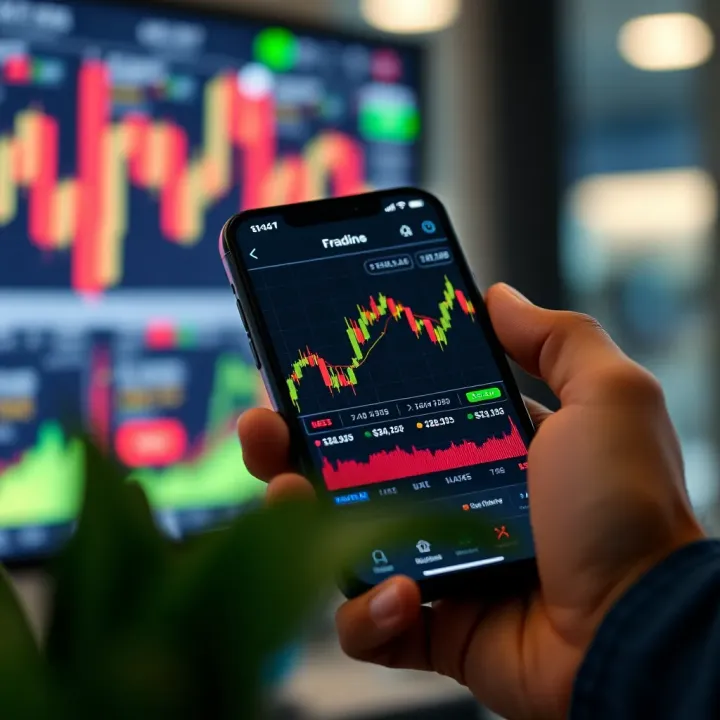
Find the best forex trading apps in Pakistan 📊. Compare features, safety, regulations, and payment options to pick the perfect platform for your needs.
Explore top forex trading apps 📱, discover smart tools 🛠️, ensure security 🔒, and get tips for beginners and pros in Pakistan's forex market 🌍.
Based on 6 reviews