

Benefits of Risk Management for Businesses
Discover how risk management boosts business decision-making, financial strength, compliance, and reputation for steady growth 📈🔍💼
Edited By
Charlotte Evans
Risk management is fundamental for traders, investors, financial analysts, brokers, and educators in Pakistan who deal with uncertainty daily. It involves systematically identifying potential problems before they impact business, assessing their possible severity, and setting priorities to tackle them effectively. This structured process helps organisations protect their capital, reputation, and operations from avoidable losses.
Understanding risk management allows professionals to make informed decisions rather than relying on guesswork or hope. For example, a broker dealing with market volatility needs to assess how sudden political events or currency fluctuations could impact client portfolios. Meanwhile, educators helping students prepare for financial exams can explain practical risk assessment processes with real-life Pakistani market examples.
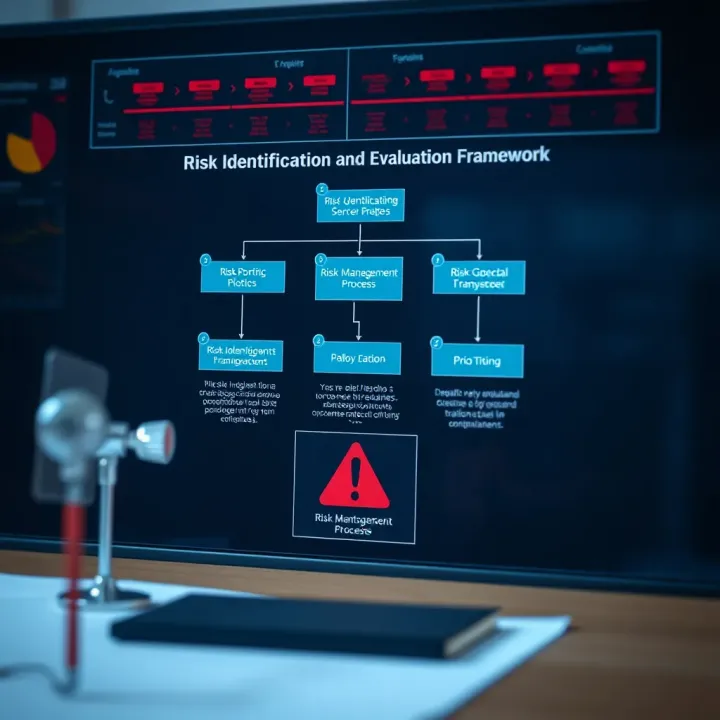
The process typically breaks down into three main parts:
This step is about spotting possible risks that could adversely affect business goals. In Pakistan’s context, these might include regulatory changes by SECP, load-shedding disrupting business hours, or currency depreciation impacting import costs. Tools like risk checklists, interviews with department heads, or analysing past incidents help gather relevant information.
Not all risks are equal—some demand immediate attention, others less so. Quantifying risk means measuring the likelihood of its occurrence alongside potential financial or reputational damage. For instance, an investor might assess the risk of a sudden drop in stock prices due to political instability as high priority since it directly threatens portfolio value.
Once prioritised, suitable controls or risk mitigation strategies are designed. These can range from diversifying investment portfolios, taking out insurance, or implementing internal controls such as compliance checks. In Pakistan, risk managers often tailor strategies considering local factors like regulatory constraints or operating environments.
Effective risk management is not a one-time task but a continuous cycle. Monitoring and reviewing risks helps ensure controls remain effective as external conditions shift.
By grasping these core steps, professionals become better prepared to shield their organisations against threats, making risk management an indispensable business practice in Pakistan’s dynamic economy.
Identifying risks and understanding their sources is the first step towards effective risk management. Without a clear picture of potential threats, businesses and investors cannot prepare adequate responses. This stage helps in spotting challenges early, saving time and resources that would otherwise be lost in damage control later.
Operational risks arise from failures in day-to-day activities. For example, a logistics company might face delays due to vehicle breakdowns or supply disruptions caused by customs clearance issues in Karachi. These risks impact efficiency, making it harder to meet deadlines or maintain service quality.
Financial risks involve threats to a company’s monetary health. Currency fluctuations, like the rupee’s sudden depreciation against the dollar, can increase costs of imported raw materials. Similarly, interest rate changes by the State Bank of Pakistan can affect loan repayments for businesses, influencing profitability and cash flow.
Compliance risks come from failing to follow laws or regulations. For instance, non-compliance with Federal Board of Revenue (FBR) tax filing rules can lead to fines and reputational damage. Businesses operating in sectors regulated by PEMRA or SECP must keep up with licensing and reporting requirements to avoid penalties.
Strategic risks relate to decisions that affect the long-term direction of an organisation. Entering a crowded market without thorough research, like launching a new textile brand in Faisalabad without analysing competitors, may result in loss of investment. Changing government policies or political instability can also shift market conditions unexpectedly.
Gathering teams for focused discussions helps uncover unseen risks. In a workshop, finance, operations, and legal departments share insights, identifying gaps from different angles. This team approach can reveal risks like vendor dependency or cybersecurity threats that a single unit might overlook.
Reviewing past project records, financial reports, or loss incidents provides a factual basis to understand recurring risks. For example, a construction company monitoring previous delays due to materials shortage can improve forecasting and supply chain planning to reduce future disruptions.
Engaging external partners, clients, and regulators offers fresh perspectives on risk areas. A telecom operator consulting PTA and customers might detect compliance risks and service interruptions early. Stakeholder input also helps align risk management with expectations, ensuring better decision-making.
Identifying risks isn’t just ticking boxes; it means digging into practical scenarios and listening across the organisation and beyond to map out realistic challenges.

Properly recognising and locating risks sets the foundation for the next steps in risk management, enabling informed action that safeguards assets and supports growth.
Evaluating the impact and likelihood of risks helps businesses understand which threats could cause the most harm and how likely they are to occur. This step guides decision-makers to focus their resources on the most pressing concerns rather than spreading efforts thin over minor issues. For example, a financial firm in Karachi might find that currency fluctuation poses a higher threat with severe impact compared to occasional software glitches. Evaluating these factors allows organisations to act proactively and minimise losses.
Qualitative methods rely on expert judgment, experience, and descriptive scales to assess risk. Typical tools include interviews, checklists, and workshops to gather insights. In practice, an investment analyst might classify risks as high, medium, or low based on potential damage and frequency without attaching precise numbers. This approach fits well when data is limited or uncertain, allowing teams to make informed estimates about risks like regulatory changes or political instability.
Quantitative techniques involve numerical data and mathematical models to measure risk severity and probability precisely. Methods such as statistical analysis, Monte Carlo simulations, and Value at Risk (VaR) calculations quantify uncertainties in financial portfolios or market trends. For instance, a stockbroker may use historical price data to calculate the likelihood and impact of a sudden market drop. These tools help in setting clear thresholds and predicting potential losses with greater confidence.
Risk matrices plot the likelihood of a risk against its impact, creating a visual tool to identify which risks need urgent attention. Heat maps use colour coding to show risk severity, from green (low) to red (critical). This method simplifies communication across departments. For example, a business monitoring supply chain disruptions can quickly spot critical bottlenecks causing immediate financial losses and address them accordingly.
Risk ranking assigns scores to risks based on predefined criteria, allowing organisations to rank them from highest to lowest priority. Scores can combine factors like financial loss, reputational impact, and recovery time. This system helps decision-makers allocate funds and effort efficiently. A trading firm could rank market volatility higher than minor regulatory delays, guiding strategy towards hedging investments over compliance follow-ups.
Proper evaluation and prioritisation of risks ensure that organisations focus on what truly matters, safeguarding assets and improving operational resilience in a competitive environment.
Creating effective strategies to handle risks is a critical step in the risk management process. This stage helps organisations decide how to respond to identified risks, minimising potential damage while taking advantage of any opportunities that might arise. For traders and investors in Pakistan, developing clear strategies can protect portfolios against market volatility or regulatory changes, while financial analysts and brokers can better advise clients with defined risk responses.
Avoiding risk means steering clear of activities that may introduce unwanted threats. For instance, a company might decide not to enter a highly volatile stock or a sector facing uncertain regulatory policies. Avoidance is practical when the potential impact outweighs the benefits or when mitigation costs are too high. However, it is not always feasible, particularly for businesses requiring exposure to some level of risk for growth.
Mitigation involves reducing the likelihood or severity of a risk. Traders could use stop-loss orders to limit financial losses in fluctuating markets, while businesses might upgrade IT security to reduce the chance of cyber-attacks. Mitigation strategies are often a balanced approach, aiming to lessen risk without completely avoiding it. In the Pakistani context, firms affected by loadshedding can install backup generators to maintain operations, cushioning the impact.
Risk transfer shifts the burden to another party, commonly through insurance policies. Businesses in Pakistan can insure their property, vehicles, or goods in transit to protect against theft, fire, or damage. Traders may also engage in hedging using derivatives to transfer market risk. While insurance and financial instruments usually involve a premium or cost, they provide peace of mind and financial stability in adverse situations.
Sometimes, accepting risk is the most practical choice, especially when the cost of avoidance or mitigation is too high compared to the risk’s potential impact. For instance, a small retailer might accept the risk of occasional supply delays rather than maintaining costly inventory buffers. Acceptance requires continuous monitoring to ensure the risk doesn’t escalate and affect business objectives.
A clear risk management plan assigns specific roles to individuals or teams. In financial firms, portfolio managers might handle market risks, while compliance officers monitor regulatory risks. Clear accountability ensures timely responses and reduces overlaps or gaps in managing risks. Setting responsibilities also clarifies decision-making paths, enhancing overall efficiency.
Controls and procedures translate strategies into daily practice. This can include checks like approving transactions above a certain value or regular audits for compliance. For example, investment firms may establish limits on exposure per asset class or require multiple approval layers for high-risk trades. Procedures should be compatible with local regulations and operational realities in Pakistan, such as accounting for bank holidays or currency fluctuations.
Managing risks effectively is not just about avoiding danger but about balancing protection with opportunity. A structured approach to selecting responses and planning allows organisations to navigate uncertainties confidently and strategically.
Implementing risk management measures puts plans into action, turning strategy into daily practice. It's a vital stage to ensure risks are actively controlled rather than simply identified or assessed. Without solid implementation, even the most thorough plans can fall apart or fail to protect against potential losses.
Allocating sufficient budget plays a key role in putting risk management into effect. Whether it's investing in new safety equipment, purchasing insurance coverage, or developing contingency funds, financial planning ensures there's money available when needed. For example, a manufacturing firm in Karachi might allocate Rs 5 crore annually for machinery maintenance and emergency repairs to reduce operational risks.
Without proper funding, risk responses such as staff training or installing monitoring systems may remain theoretical. It’s essential that businesses link their risk management budget with their overall financial plan to avoid surprises or shortfalls.
Training is crucial to embed risk management into company culture. Employees need to recognise risks in their daily routines and know how to respond. Conducting regular workshops or awareness sessions creates a proactive workforce.
For instance, a bank in Lahore might organise quarterly training for tellers and cash officers on fraud detection and compliance risks, reducing incidents and regulatory penalties. When staff stay well-informed, the risk strategy is more likely to succeed in practice.
Operational changes involve adapting processes and systems to reduce risk exposure. This might include modifying supply chain processes, changing working hours to reduce accident risk, or revising procurement policies.
As an example, a textile mill in Faisalabad could introduce automated quality checks to minimise defects, thereby controlling financial losses and customer dissatisfaction. These changes require clear communication and management commitment to work smoothly.
Effective risk management depends on ongoing surveillance of implemented controls. Digital monitoring tools like dashboards, real-time alerts, or data analytics help track risk indicators continuously.
For example, businesses in Islamabad might use specialised software to monitor currency fluctuations impacting import costs daily. Regular reports highlight emerging risks promptly, allowing quick response and adjustment of controls.
Implementing risk management is not a one-time task but a continuous process of resource allocation, employee engagement, operational adjustment, and vigilant monitoring to safeguard organisational goals.
By focusing on these practical areas, traders, investors, and financial analysts operating in Pakistan can make sure their risk plans don't just sit on paper but actively protect their interests amid changing market and operational conditions.
Continuous monitoring and reviewing of risks is key to effective risk management. This step ensures that risks are kept under control as environments evolve. Without regular oversight, emerging risks or changes in existing risks may go unnoticed, increasing the potential for losses. For traders or financial analysts in particular, tracking risks dynamically helps them adjust strategies to protect investments more efficiently.
Key Risk Indicators (KRIs) serve as early warning signals for potential issues within an organisation or portfolio. These measurable metrics highlight shifts that could impact risk levels, such as a sudden drop in market liquidity or rising loan defaults. For example, an investment firm might monitor leverage ratios as KRIs, flagging when debt levels reach a threshold that could threaten solvency.
KRIs are practical because they allow proactive actions before risks escalate. By setting well-defined KRIs aligned to specific objectives, businesses can quantify risk trends and spot warning signs early. This reduces guesswork and supports data-driven decision-making.
Regular Reporting and Updates keep all stakeholders informed about the current risk landscape and the effectiveness of risk controls. Whether monthly risk dashboards or quarterly reviews, timely reports help management assess risk posture and allocate resources accordingly. Consider a bank that compiles weekly compliance risk updates to ensure emerging regulatory requirements are met promptly.
Frequent updates also foster accountability. When teams consistently report on risk indicators, it encourages a culture of vigilance and continuous improvement. This is especially valuable in fast-moving markets where risks can shift quickly.
Periodic Reviews of risk assessments and management plans are essential to maintain their relevance. Scheduled reviews, such as every six months or annually, give organisations a chance to revisit assumptions, check the effectiveness of controls, and adjust priorities based on recent experiences.
For instance, a manufacturing firm may review its operational risks before peak production seasons to prepare for potential supply chain disruptions. These reviews create opportunities to learn from past incidents and recalibrate risk strategies, preventing outdated or ineffective measures.
Responding to Changes in the Environment is critical for risk management to stay current. Market conditions, political situations, or technological advances can all alter the risk profile abruptly. For example, sudden changes in Pakistan's import policies or power outages can increase operational risks for exporters and manufacturers.
Flexibility in risk management plans means decisions can adapt when such shifts occur, rather than sticking rigidly to old frameworks. This responsiveness protects organisations from surprises and helps seize opportunities while managing downsides.
Regular monitoring and review are not just formalities; they are the backbone of resilient risk management that keeps your business agile amid changing circumstances.
By systematically tracking KRIs, updating reports, reviewing plans periodically, and adjusting to environmental changes, traders, investors, and analysts can maintain a clear view of risks. This disciplined approach equips them to manage uncertainties confidently and safeguard their objectives effectively.
Discover how risk management boosts business decision-making, financial strength, compliance, and reputation for steady growth 📈🔍💼

📊 Discover how actuarial science helps assess and manage financial risks in insurance and finance, tailored for professionals and students in Pakistan.

🔍 Explore binary classification in machine learning—key concepts, popular algorithms, evaluating models, and practical uses across real-world scenarios.

📊 Learn binary addition with clear, practical examples! Understand basics, carrying method, and solve problems confidently for easy mastery of binary numbers.
Based on 6 reviews