

Understanding Binary Classification Basics
🔍 Explore binary classification in machine learning—key concepts, popular algorithms, evaluating models, and practical uses across real-world scenarios.
Edited By
Emily Saunders
Non-binary identity refers to people who do not identify exclusively as male or female. This challenges the traditional gender binary that dominates most societies, including Pakistan. Unlike the fixed categories of ‘man’ or ‘woman’, non-binary persons may feel their gender exists somewhere in between, beyond, or completely outside these labels.
Understanding this identity requires recognising its diversity. Some non-binary people prefer terms like genderqueer, genderfluid, or agender, reflecting variations in how they experience gender. These identities are personal and do not fit neatly into existing cultural or legal frameworks, which tend to be rigid and binary-oriented.

Non-binary persons experience the world differently because societal systems often demand clear categories. This can make everyday activities—from filling official forms to socialising—more challenging.
In Pakistan especially, where gender norms are deeply entrenched in culture and law, non-binary individuals face added difficulties. Official documents like the CNIC (Computerised National Identity Card) only allow for male or female markers, leaving no room for non-binary recognition. Socially, the absence of widespread awareness and support can lead to discrimination, misunderstanding, or reluctance to express authentic identities.
For businesses, educators, and financial analysts, grasping the nuances of non-binary identities is important when considering inclusivity policies or marketing strategies. Respect and recognition foster trust and loyalty, which are valuable in diverse markets.
Here are some key points to understand non-binary identity:
Gender is separate from biological sex: Non-binary refers to gender identity, not physical anatomy.
Terms and preferences vary: People may use different words to describe their experience.
Identity can be fluid: Some non-binary people’s gender expression changes over time.
Legal systems may not accommodate non-binary identities: This impacts access to rights and services.
Social understanding is growing but still limited in Pakistan: Awareness efforts are essential.
Recognising the existence and rights of non-binary persons moves society closer to fairness and inclusion. It helps reduce stigma and allows all people to live authentically and contribute fully.
Next, we will explore the specific challenges non-binary individuals face in Pakistani social and legal contexts.
Understanding what it means to be non-binary is essential, especially in a society like Pakistan where gender norms remain largely binary. A non-binary person does not identify exclusively as male or female. Recognising this helps reduce confusion and creates an environment where non-binary individuals feel seen and respected. For traders, educators, and financial analysts alike, awareness about diverse identities is not just ethical but also practical when interacting in multicultural settings.
Gender usually refers to the social and cultural roles associated with being male or female. However, non-binary identity challenges this traditional two-gender view. Someone who is non-binary may feel that their gender lies outside or between these categories. For example, a person might identify as both male and female, somewhere in between, or as neither. This perspective allows for a more flexible and personal understanding of identity, which is important for respecting individual experiences.
In practical terms, recognising gender beyond male and female challenges existing systems like identity verification or workplace policies, which often require binary gender options. A non-binary person might prefer not to be categorised into these fixed groups, signalling a need for more inclusive approaches.
Several terms relate to non-binary identities, and knowing them helps avoid misunderstandings. "Genderqueer" is often used interchangeably with non-binary but can carry political or cultural connotations. "Genderfluid" describes people whose gender identity changes over time. "Agender" refers to those who don't identify with any gender at all.
In Pakistan, these terms might be unfamiliar, but educating peers helps foster respect. For example, a workplace training might explain the meaning of pronouns like "they/them" to accommodate non-binary colleagues properly.
Transgender is an umbrella term for people whose gender identity differs from the sex assigned at birth. Non-binary falls within this umbrella but specifies identities that aren't strictly male or female. Not all transgender people are non-binary—many identify fully as male or female—but all non-binary persons are part of the broader transgender community.
This distinction matters in policy and legal recognition. For example, Pakistani laws recognising transgender persons mainly address male-to-female or female-to-male transitions. Including non-binary identities would require expanding these legal categories beyond a binary framework.
Some common non-binary identities include:
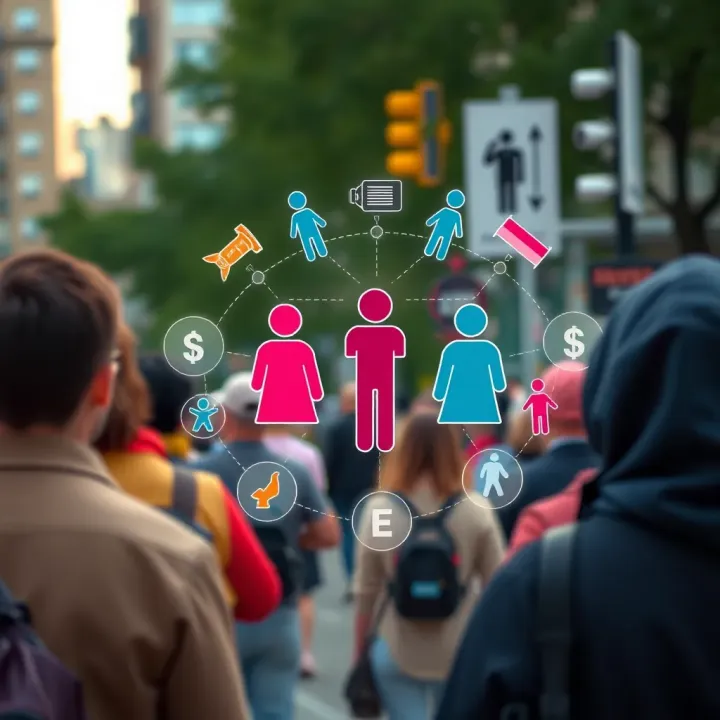
Bigender: Identifying as two genders, either simultaneously or at different times.
Demiboy/Demigirl: Feeling partially connected to male or female genders but not fully.
Third gender: Some cultures, including parts of Pakistan, recognise identities outside the male-female binary, such as the hijra community, which overlaps but is not identical to non-binary.
By learning these examples, educators and workplaces in Pakistan can better appreciate the diversity of gender experiences and adapt their practices accordingly.
Recognising and understanding non-binary identities helps build more inclusive workplaces, schools, and social spaces. Everyone benefits when we respect the true identity of individuals rather than forcing them into predefined categories.
Non-binary individuals in Pakistan face a unique set of challenges shaped by social attitudes and institutional barriers. Understanding their experiences sheds light on gaps in acceptance, legal recognition, and access to services. For investors and educators interested in social dynamics, these realities influence work environments, market behaviours, and educational inclusivity.
Attitudes from family and community often define the early experience of non-binary individuals. In many Pakistani households, family honour and social conformity carry strong weight, making it difficult for non-binary persons to express their identity openly. Parents and relatives may react with confusion or rejection rather than support. For example, a young non-binary person in Lahore might face opposition if they use pronouns that differ from those expected by the family, leading to emotional distress or social isolation.
Community attitudes in smaller towns or conservative areas tend to be less accepting than in big cities such as Karachi or Islamabad. Neighbourhood gossip and peer pressure often discourage anyone from stepping outside traditional gender norms. This lack of social acceptance can impact mental health and limit opportunities for social interaction, affecting motivation and confidence.
Impact of cultural and religious norms plays a significant role in shaping the public perception of gender identities. Pakistan's dominant religious frameworks often promote a binary understanding of gender, which clashes with non-binary identities. Many religious scholars interpret texts as affirming male or female roles exclusively, leaving little space for other identities. This restricts social dialogue and legitimises exclusion or discrimination.
Cultural traditions tied to dress codes, marriage customs, and community roles also reinforce strict gender categories. For example, events like weddings or religious ceremonies often have expectations that exclude non-binary expressions. These cultural norms limit visibility and make it harder for non-binary individuals to claim a public space without facing stigma.
Barriers in educational institutions affect non-binary students’ ability to participate fully. Many schools and universities lack policies recognising gender diversity; registration forms and class lists usually require a binary gender choice. Students who identify as non-binary may feel invisible or forced to misrepresent themselves, impacting their comfort and performance.
Bullying and harassment in educational environments remain concerns. Without explicit anti-discrimination protections, non-binary students may suffer from exclusion or verbal abuse. Such experiences can lead to early dropout, limiting future opportunities.
Employment discrimination and workplace inclusion present further challenges. Many employers still lack awareness about non-binary identities, which can lead to biases in hiring, promotion, and day-to-day interactions. For instance, misgendering by coworkers or managers can create uncomfortable environments. A non-binary employee in Karachi’s tech sector might hesitate to disclose their identity fearing prejudice.
Workplaces rarely provide gender-neutral facilities or policies that accommodate non-binary needs, such as inclusive dress codes or pronoun usage. These gaps discourage full inclusion and can reduce productivity or job retention.
Healthcare access and sensitivity to non-binary needs is another critical issue. Healthcare providers often have limited training about gender diversity, leading to misunderstandings or refusal of care. Non-binary persons may avoid medical settings because of fear of discrimination or embarrassment.
Additionally, medical forms and records typically require male or female gender markers, complicating access to gender-affirming healthcare or mental health support. For example, a non-binary patient seeking counselling in Islamabad might find few specialists who understand non-binary experiences, which affects the quality of care.
Addressing these practical challenges is essential for creating inclusive environments where non-binary persons can participate fully in education, work, and health services. Awareness and policy improvements benefit not only individuals but also strengthen social cohesion and economic potential.
Legal recognition of non-binary persons is a significant step towards inclusion and protection under the law. Without such recognition, non-binary individuals face difficulties in accessing services, asserting rights, and gaining social validation. This section explains Pakistan’s current stance and what other countries have done, to draw lessons that can guide local policies.
Pakistan’s legal system traditionally recognises only two genders: male and female. However, the Transgender Persons (Protection of Rights) Act 2018 offers a wider understanding by explicitly acknowledging the third gender, which mainly covers transgender communities. Although this is a positive move, it stops short of recognising non-binary as a distinct legal gender category. This limitation means that non-binary individuals still lack formal recognition in official records.
When it comes to civil documentation and identity cards, Pakistan’s National Database and Registration Authority (NADRA) allows individuals to register as male, female, or transgender. There isn’t yet an option labelled as non-binary, which complicates matters such as voting, education enrolment, and employment verification for those who don’t identify strictly as male or female. This lack of nuanced options in identity documents affects privacy, dignity, and access to rights.
Several countries have legally recognised non-binary genders, setting precedents that Pakistan can observe. For instance, countries like Canada, Australia, Germany, and Nepal issue passports or national ID cards with an ‘X’ marker or other non-binary designations, allowing individuals to self-identify beyond just male or female. This approach not only affirms gender diversity but also eases bureaucratic hurdles.
Pakistan could benefit from adapting similar policies by:
Introducing a third gender category explicitly listing non-binary in official forms and documents
Simplifying procedures to change legal gender markers without invasive requirements
Ensuring that all government departments recognise and accept non-binary identities equally
Such reforms would enhance the civic participation and legal protections of non-binary persons, while aligning Pakistan with international human rights standards.
Legal recognition of non-binary persons is more than a formality — it offers real protection against discrimination and exclusion.
By learning from international experience and tailoring reforms to Pakistan’s own cultural and legal environment, policy makers can bridge gaps in inclusion and build a more just society.
Supporting non-binary persons requires deliberate actions that promote respect, dignity, and equal opportunities. Such support helps reduce social exclusion, mental health struggles, and discrimination. In Pakistan, practical steps for inclusion are essential because non-binary identities often face misunderstanding and lack of formal recognition. Addressing these challenges benefits not just individuals but also broader society by fostering diverse, tolerant environments.
Using correct pronouns is a straightforward yet powerful way to show respect to non-binary persons. Common pronouns include "they/them," "ze/hir," and sometimes gender-neutral alternatives like "xe/xem." While "he/him" and "she/her" remain standard for many, non-binary people often prefer these neutral options. Learning and applying the correct pronouns avoids misgendering, which can cause emotional distress and feelings of invisibility.
The key is to simply ask individuals how they prefer to be addressed. This small step shows acknowledgment of their identity and fosters an atmosphere of acceptance. Ignoring chosen pronouns risks alienating non-binary persons and perpetuates stereotypes. In workplaces, schools, or social settings, normalising this practice can significantly improve inclusion and trust.
Schools, workplaces, and public services must play an active role in creating inclusive spaces for non-binary individuals. Policies can include gender-neutral washrooms, flexible dress codes, and updating forms to allow options beyond "male" or "female." For example, some Pakistani universities have begun admitting students using gender-neutral identity standards, setting a positive precedent. In workplaces, human resource departments can train staff on gender diversity to foster respectful communication and prevent harassment.
Community support groups and advocacy organisations offer safe spaces for non-binary persons to connect, share experiences, and advocate for rights. In Pakistan, groups like the Nazariya Foundation work to raise awareness and provide resources tailored to gender minorities. These organisations also educate the public and policymakers, pushing for legal reforms and social acceptance. Participation in such groups helps individuals feel less isolated and more empowered.
Creating respectful environments and supporting non-binary identities is more than an ethical responsibility—it strengthens social cohesion and promotes equality across Pakistan. Practical steps like respectful language, inclusive policies, and community support can make a real difference in everyday lives.
Stereotypes around non-binary individuals often cloud public understanding, making it harder for society to accept and support them fairly. Clearing up these misconceptions serves practical benefits, especially in workplaces, educational institutions, and policymaking. When people recognise the realities behind non-binary identities, it reduces bias, discrimination, and miscommunication. For instance, a trader or business leader aware of non-binary diversity might ensure hiring practices and workplace policies are inclusive, creating a healthier environment for all employees.
One common misunderstanding is equating non-binary identity with being transgender or assuming it means transitioning medically. While some non-binary persons may also identify as transgender, these terms are not interchangeable. Transgender typically refers to someone whose gender identity differs from their sex assigned at birth, but most often aligned strictly as male or female. Non-binary, on the other hand, describes those who do not fit solely into male or female categories.
For example, a broker or educator might wrongly assume non-binary simply means "in between" male and female or that non-binary individuals will pursue hormone treatments. In practice, many non-binary people do not seek medical transition and focus instead on expressing their gender in varied ways. Separating these definitions improves communication clarity and fosters more respectful conversations.
Non-binary is an umbrella term covering several gender identities beyond the usual male/female binary. These include identities such as genderfluid, agender, bigender, among others. Each label reflects different experiences and ways of feeling about one's gender.
Recognising this diversity is important, especially in Pakistani social contexts where gender roles tend to be rigid. Understanding that non-binary experiences vary means avoiding assumptions that all non-binary persons share the same feelings or face the same challenges. For instance, someone who identifies as genderfluid might change pronouns depending on their mood or situation, while another person might prefer a fixed pronoun.
Respecting these nuances leads to practical inclusivity—whether in classrooms, offices, or financial settings—by allowing individuals the space to express their gender authentically.
In short, breaking these stereotypes helps investors, educators, and professionals relate better to non-binary persons. It ensures policies, services, and relationships become more just and considerate, reflecting the true complexity of human identity.
🔍 Explore binary classification in machine learning—key concepts, popular algorithms, evaluating models, and practical uses across real-world scenarios.

📊 Learn binary addition with clear, practical examples! Understand basics, carrying method, and solve problems confidently for easy mastery of binary numbers.

Learn how binary division works step-by-step with our easy calculator 🧮. Understand binary numbers, algorithms, and examples to boost your skills confidently!

Explore the essentials of binary digits (bits) 🖥️ – how they form data, drive computing, and support error detection in today’s tech world.
Based on 10 reviews