

Understanding Binary Classification Basics
🔍 Explore binary classification in machine learning—key concepts, popular algorithms, evaluating models, and practical uses across real-world scenarios.
Edited By
Amelia Watson
Binary options have caught the eye of many traders in Pakistan recently, offering a straightforward way to bet on the price movements of assets like stocks, commodities, or currencies. Unlike traditional trading, binary options require traders to predict whether an asset's price will rise or fall within a set time period, making the process simpler but not risk-free.
At its core, a binary option has only two possible outcomes: you either make a fixed profit if your prediction is correct or lose the amount you invested on the trade. Because the payoff is all-or-nothing, this financial instrument is called “binary” — meaning two choices only.
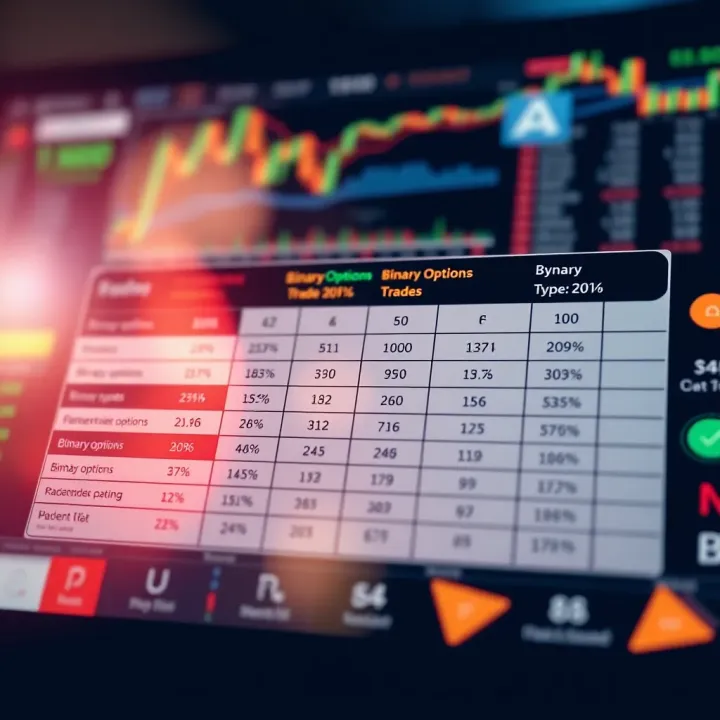
For example, you might predict that the price of crude oil will be above $70 per barrel in the next hour. If you're right when the hour expires, the broker pays you a predetermined return, say 70% of your investment. If you're wrong, you lose the entire amount you staked.
Binary options are attractive for their simplicity and quick results, but they carry high risks due to the all-or-nothing payout structure.
This simplicity is why binary options appeal to newcomers and experienced traders looking for fast trades. However, the market can be volatile, and the short expiry times can lead to losses faster than you expect.
In Pakistan, regulatory bodies have issued warnings about unregulated platforms offering binary options. It's crucial for traders to verify that the platforms they use comply with Pakistan Telecommunication Authority (PTA) regulations and other financial watchdogs. Many platforms operating without licenses should be approached with caution.
To sum up, understanding how binary options work and recognising the risks involved is the first step before considering trading in this space. The following sections will cover different types of binary option trades, how to evaluate trading platforms, and key risks to watch out for, tailored for the Pakistani financial market.
Understanding the basics of binary options is key for anyone considering this form of trading. This section explains what binary options entail and how they operate, helping investors make informed decisions. Knowing the foundation lets you assess whether binary options fit your trading style and risk appetite.
Binary options are simple financial contracts where the outcome is all or nothing. You predict whether the price of an asset—a stock, currency pair, or commodity—will rise or fall within a specific time frame. If your prediction is correct, you receive a fixed payout; if not, you lose the invested amount. For instance, you may bet Rs 10,000 that the price of KSE-100 index will be higher in the next hour. If right, you get a predetermined return, otherwise, you lose your Rs 10,000.
Unlike traditional trading where profits or losses vary depending on price movement, binary options offer fixed returns. In standard trading, for example, if you buy shares, your profit depends on how much the price goes up. But with binary options, the risk and reward are set before you enter the trade. This makes binary options easier to understand but more like a wager. Traditional traders often prefer more control and flexibility, while binary options appeal to those who want clear, fixed risks.
Binary options involve basically two choices: a call option or a put option. Choosing a call means you expect the asset’s price to rise by expiry; a put means you expect it to fall. Take Pakistan’s currency pair USD/PKR—if you believe the rupee will weaken against the dollar in the next 30 minutes, you’ll pick a call option. This binary approach simplifies decision-making.
Each binary option has a set expiry time—from as short as 60 seconds to several hours or days. The expiry determines when the outcome is settled. For example, if you buy a binary option on a particular stock with 15 minutes expiry, at that 15-minute mark, the broker checks whether the price went up or down. You get the fixed return if your prediction matches; otherwise, your initial stake is lost. This time limitation makes binary options fast-paced compared to traditional investments.
Returns in binary options are fixed before trading and usually range between 60-90% of the invested amount. However, if your prediction fails, you lose the full stake. For instance, investing Rs 5,000 with a 75% return means you can earn Rs 8,750 if correct, or lose Rs 5,000 if wrong. This all-or-nothing result requires careful risk management, especially since losses can add up quickly if multiple trades fail consecutively.
Binary options offer a clear risk-reward setup, but their simplicity comes with high risk. Knowing the mechanics helps you approach trading strategically rather than guesswork.
This foundation will help you evaluate binary options realistically and decide if they suit your trading goals, especially within the Pakistani market context.
Binary options trading offers several types of trades, each with its own method for predicting market movements. Understanding these types helps traders choose the best approach according to their risk tolerance and market view. Here, we look at the common binary options trades: High/Low, Touch/No-Touch, and Range or Boundary trades.
High/Low trades are the simplest and most popular binary options type. You predict whether the price of an asset like a currency pair or stock index will be higher or lower than the current price at a specified expiry time. For example, if the USD/PKR rate is 285 and you believe it will rise to above 285 within the next hour, you buy a 'Call' option. If you expect it to fall, you buy a 'Put' option instead.
The appeal of High/Low trades lies in their straightforward nature and quick setup. However, success depends on accurate market timing and understanding short-term trends. This type suits traders new to binary options or those who prefer clear-cut decisions.

Touch/No-Touch trades require predicting whether an asset's price will reach a specific level, called the trigger price, at any moment before expiry. A Touch trade means you expect the price to touch or surpass this point; a No-Touch trade means the opposite.
For instance, suppose the KSE-100 index trades at 45,000 points, and you pick a Touch trade with a trigger at 45,500. If the index hits 45,500 anytime during the trade period, you win. If it doesn’t, the No-Touch option would be profitable instead.
These trades allow more flexibility since the price doesn't have to stay beyond the trigger; just touching it once suffices. However, they can be riskier due to price volatility, so thorough market analysis is advised before placing such trades.
Range or Boundary trades involve predicting whether the price will remain within a set range or boundary until expiry. For example, if the price of a commodity like crude oil is between $70 and $75, you bet on whether it will stay inside or break out.
This type suits markets with expected low volatility, such as during a calm trading session or after major announcements. Range trades often offer attractive returns due to their moderate risk profile.
Knowing these trade types equips you with options to match your trading style, whether you prefer straightforward bets or more nuanced predictions. Selecting the right trade type and combining it with good market research improves your chances in binary options trading.
Overall, understanding the mechanics and risks of each trade type helps traders avoid rushed decisions and adopt strategies that suit Pakistan’s market conditions better.
Trading binary options carries specific risks that you should know before putting your money on the line. These instruments offer what looks like a straightforward way to trade, but their fixed nature and market unpredictability can quickly lead to losses. Understanding these risks helps you make informed decisions and manage your investments better.
Binary options work on a simple principle: you either win a fixed payout or lose the entire amount invested. For example, if you bet Rs 10,000 on a call option predicting a currency pair’s price will rise, you stand to earn a predetermined sum if correct. But if the price drops, you lose your full Rs 10,000. This means no partial recoveries; your profit and loss are capped and fixed before you enter the trade.
This fixed risk and reward setup can simplify calculations but also means you need to be very cautious with your trades. It’s like betting on a race where you know exactly how much you can gain or lose, which might be appealing but can lead to frequent losses if your predictions aren’t accurate.
Market volatility heavily affects binary options since these trades depend on price movements within short expiry times. Sudden news—like changes in oil prices, central bank announcements, or political events—can swing asset prices unexpectedly. For instance, during Ramadan or election seasons, financial markets can behave erratically in Pakistan, increasing the risk that your option expires out of the money.
Understanding market volatility means staying updated on economic calendars and news. It also means not risking more than you can afford to lose, as even seemingly straightforward trades can be tossed about by sudden market changes.
Many binary options traders fall victim to unregulated platforms promising huge profits with minimal effort. These platforms often operate without proper licences from bodies like the Securities and Exchange Commission of Pakistan (SECP). They might freeze withdrawals or manipulate trading data to their benefit.
Always check a broker’s licence status before depositing money. SECP’s public registry can help verify authorised operators. Using regulated platforms reduces the risk of fraud and ensures some official recourse if something goes wrong.
Some companies aggressively market binary options with claims of guaranteed returns or insider tips. They might use fake testimonials or show unrealistic success stories to lure you. For example, a trader may be told they can double their money in a week, which sounds tempting but is not realistic.
Trustworthy brokers won’t promise fixed profits because market risks always exist. Be suspicious of any platform pushing quick riches; instead, focus on learning trading strategies and risk management to make evaluated decisions.
Always approach binary options with caution, focusing on regulated brokers and clear understanding of the all-or-nothing risk.
By keeping these risks in mind, you can better protect your capital and avoid common pitfalls in binary options trading.
Understanding the regulatory environment is vital for anyone considering trading binary options in Pakistan. Local laws and regulations shape what platforms you can trust, which brokers operate legally, and how consumer protections apply. This knowledge helps avoid scams and ensures compliance with Pakistani financial rules.
The Securities and Exchange Commission of Pakistan (SECP) oversees capital markets and financial services in the country. Its role includes licensing investment firms and monitoring their operations to protect investors. While SECP does not currently permit binary options trading as a regulated product, it actively cautions the public about unregulated platforms claiming to offer such services.
SECP’s oversight aims to prevent illegal schemes and fraudulent brokers from exploiting inexperienced traders. For example, if a trading platform is not registered with SECP, it may operate without necessary safeguards or transparency. Therefore, traders should confirm whether a broker holds SECP approval before investing to reduce risks.
Pakistani financial authorities, including SECP and the State Bank of Pakistan (SBP), have repeatedly issued warnings against binary options trading due to its speculative nature and frequent association with scams. These warnings highlight cases where investors have lost significant funds to fraudulent brokers operating without legal oversight.
Such advisories serve as important reminders: trading with unregulated brokers may leave you without legal recourse in case of disputes. They encourage investors to stay alert, avoid platforms promising unrealistic profits, and only deal with firms that adhere to Pakistan’s financial regulations.
A critical step in choosing a broker is verifying their licensing status. Legitimate brokers operating in Pakistan usually have approval from SECP or recognised international regulatory bodies like the FCA (UK) or CySEC (Cyprus). These licences indicate the broker meets key standards for transparency, capital adequacy, and ethical conduct.
Before registering with a broker, ask for their licence number and check it through official regulator websites. Avoid any platform that cannot prove proper licensing, as it likely operates illegally, increasing your exposure to fraud and unfair practices.
Beyond licences, a broker’s reputation offers practical insights into its reliability. Seek out user reviews, expert analyses, and feedback on independent forums. For example, brokers with numerous unresolved complaints or withdrawal issues often signal trouble.
Reputable brokers tend to be transparent about fees, provide clear terms, and support swift deposits and withdrawals. Platforms with a strong track record, especially among Pakistani traders, usually inspire greater confidence.
Always remember: a legal licence and good reputation do not guarantee profits but provide safer conditions to trade. Avoid shortcuts and do thorough research before committing any funds.
By knowing the regulatory landscape and verifying broker credentials, traders in Pakistan can better protect themselves when exploring binary options, which remain a high-risk investment choice under current laws.
Getting into binary options trading requires more than just understanding the mechanics. Practical tips help you navigate the market safely and make informed decisions, reducing the chances of costly mistakes. This section outlines key points to focus on, especially for Pakistani traders seeking reliable and secure platforms.
Verifying a trading platform is the first step to ensure it operates legally and transparently. Check if the platform requests valid documentation like a National Database and Registration Authority (NADRA) issued CNIC and proof of address during registration. This safeguards your identity and complies with know-your-customer (KYC) rules common in Pakistan’s financial sector. Platforms that shy away from this process may be hiding risks.
A trustworthy broker will also have visible licensing information, either from Pakistan’s Securities and Exchange Commission (SECP) or recognised international bodies. Make sure to cross-check the licence number on official websites to avoid unregistered or fraudulent sites.
A good platform should offer smooth deposit and withdrawal options through local channels such as JazzCash, Easypaisa, or direct bank transfers. Having these familiar and convenient methods not only saves time but also eliminates additional costs related to currency conversion or high fees.
Furthermore, withdrawal requests should be processed promptly—ideally within 24 to 72 hours. Platforms delaying withdrawals or imposing unclear conditions should raise red flags. Always read user reviews and verify withdrawal policies carefully before committing any funds.
Risk management starts with setting clear investment limits to protect your capital. Decide beforehand how much you are willing to lose daily or weekly; for example, limiting losses to Rs 10,000 in a single day can help prevent reckless trading during losing streaks.
Using stop-loss strategies or fixed investment amounts per trade ensures you don’t bet more than you can afford to lose. This disciplined approach helps control exposure to the binary option’s all-or-nothing nature.
Binary options can tempt you to chase losses or double down impulsively, especially after a bad day in the market. Emotions often distort judgment and lead to poor decisions like increasing stakes without analysis.
To avoid this, take breaks after a few trades and stick to your trading plan strictly. Consider keeping a trading journal to note why and how you made decisions; this habit promotes reflection and curbs impulsive moves.
Successful trading in binary options hinges not just on market knowledge but on choosing safe platforms and managing risks wisely. Following these practical tips improves your chances of steady progress and shields you from common pitfalls.
🔍 Explore binary classification in machine learning—key concepts, popular algorithms, evaluating models, and practical uses across real-world scenarios.

📊 Learn binary addition with clear, practical examples! Understand basics, carrying method, and solve problems confidently for easy mastery of binary numbers.

Learn how binary division works step-by-step with our easy calculator 🧮. Understand binary numbers, algorithms, and examples to boost your skills confidently!

Explore the essentials of binary digits (bits) 🖥️ – how they form data, drive computing, and support error detection in today’s tech world.
Based on 13 reviews