
Understanding Binary Code in Everyday Tech
💻 Discover how binary code, the core of digital tech, powers computers to store and process data, with a look into its history and uses in daily life.
Edited By
Charlotte Jenkins
Binary is the basic language computers use to process and store information. Unlike the decimal system we use daily, which has ten digits from 0 to 9, the binary system relies on only two digits: 0 and 1. This simplicity makes it ideal for digital devices, where electrical signals can be easily represented as off (0) or on (1).
At its core, binary is the reason why computers, smartphones, and other digital gadgets function correctly, converting complex tasks into simple yes/no decisions.
Each binary digit, or bit, holds crucial information. When combined into groups like bytes (eight bits), it can represent numbers, letters, or instructions. For example, the letter 'A' is represented in binary as 01000001.
Reliability: Electrical circuits only need to distinguish between two states, making binary systems less prone to errors than systems with many levels.
Efficiency: Binary code supports compact data storage and faster processing by computers.
Universality: All programming languages and digital formats eventually translate into binary at the hardware level.
From online banking transactions using JazzCash and Easypaisa to government databases managed through NADRA, binary code forms the unseen backbone. All data, be it your mobile phone's SMS or a company's stock trading algorithm, runs in binary beneath the user-friendly interfaces.
Computer servers in Karachi or Lahore handle millions of bits daily, ensuring continuous business operations amid challenges like loadshedding by optimising energy use and error correction through binary logic.
Understanding binary also helps financial analysts grasp how digital trading platforms manage data integrity and execute trades swiftly based on precise binary commands.
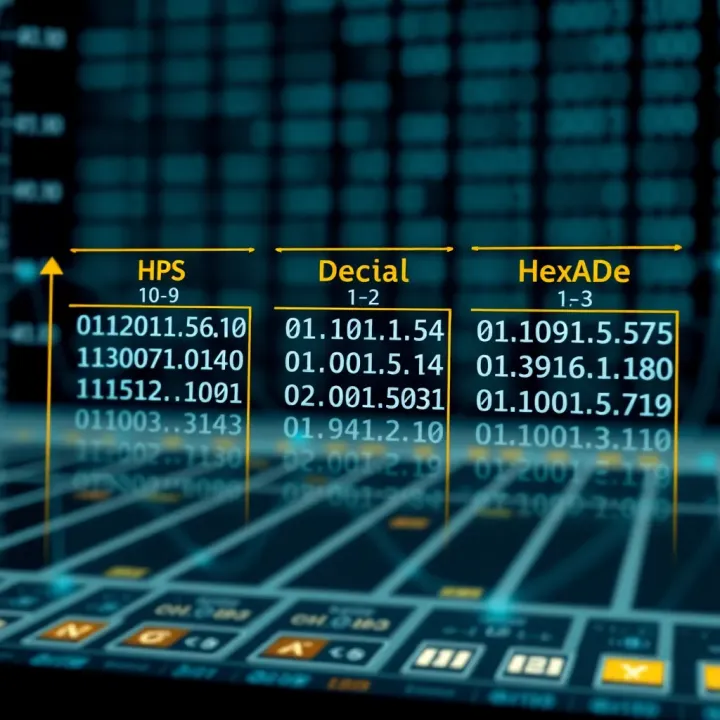
| Number System | Base | Digits Used | Common Use | | --- | --- | --- | --- | | Decimal | 10 | 0–9 | Everyday counting and finance | | Binary | 2 | 0, 1 | Digital technology and computing| | Hexadecimal | 16 | 0–9, A–F | Memory addresses, colour coding |
For programmers and tech professionals, hexadecimal often serves as a convenient shorthand for reading long binary sequences, especially in system debugging and network configurations.
Understanding how binary works clarifies much of the technology we rely on daily. It offers insight into the foundation beneath cryptocurrency networks, automated trading platforms, and even everyday apps like Foodpanda or Careem, which are reshaping Pakistan’s digital economy.
In the digital world, binary is the fundamental language that computers use to process and store data. Understanding binary is key to grasping how technology around us functions, from mobile phones to banking systems in Pakistan. Binary's simplicity—using only two digits—makes it highly reliable for machines to handle complex tasks efficiently.
The binary number system operates on base-2, meaning it uses only two symbols: 0 and 1. Unlike the decimal system, which we use in daily life and is based on ten digits (0-9), binary counts with just these two digits. Practical relevance comes from this minimalism—electronic components in devices easily represent two states such as ON/OFF or high/low voltage, corresponding naturally to 1s and 0s.
This makes binary particularly suited to digital circuits and computing hardware. For instance, a simple switch in a computer hardware can represent a binary digit, enabling fast and error-resistant communication between components.
Binary digits, or bits, serve as the smallest unit of data in computing. Each bit holds a single value—either 0 or 1—which together form larger data sets like bytes (8 bits). For example, the letter 'A' in a computer is represented by the byte 01000001 in binary.
In practice, these 0s and 1s govern everything from how your smartphone processes an incoming call to how a bank’s ATM verifies your transaction. Understanding this helps investors and analysts see the backbone of digital infrastructure that powers Pakistan’s growing tech economy.
The decimal (base-10) system uses ten digits and is intuitive for humans due to its alignment with counting on fingers. Each position in a decimal number represents a power of ten. For example, 345 means 3×100 + 4×10 + 5×1.
On the other hand, binary (base-2) positions represent powers of two. The binary number 101 means 1×4 + 0×2 + 1×1 = 5 in decimal. This difference is significant in technology, as binary simplifies how computers operate internally while the decimal system remains easier for human interaction.
Computers favour binary because their hardware components have two distinct states that can easily be differentiated and detected—electrically ON or OFF. This binary state reduces the risk of errors caused by electrical noise or fluctuations, which would be more common if multiple voltage levels were used.
Moreover, binary allows for simpler circuit design and increases reliability, particularly important in the fast-paced traders' and investors' environments where technology handles transactions worth millions of rupees swiftly and securely.
Understanding these basics helps professionals appreciate the stability and efficiency behind Pakistan's digital services, such as JazzCash or Easypaisa, which rely heavily on binary processing to ensure secure transactions.
In short, the binary number system may look simple with just 0s and 1s, but it is a powerhouse behind the technologies shaping Pakistan's financial and digital landscape today.
Understanding the mechanics of binary numbers is central to grasping how computers process and store data. This system allows all sorts of digital operations to happen reliably using only two digits: 0 and 1. By mastering how to convert and perform arithmetic in binary, you gain insight into the very language that underpins software, hardware, and digital communication.
Converting between binary and decimal is essential for interpreting computer data in human-friendly terms. To convert from binary to decimal, multiply each bit by 2 raised to the power of its position, starting from zero on the right. For example, the binary number 1011 translates as (1×2³) + (0×2²) + (1×2¹) + (1×2⁰) = 8 + 0 + 2 + 1 = 11 in decimal.
The reverse process, decimal to binary, involves dividing the decimal number by 2 repeatedly and noting the remainders. For instance, converting decimal 13 to binary: 13 ÷ 2 = 6 remainder 1, 6 ÷ 2 = 3 remainder 0, 3 ÷ 2 = 1 remainder 1, 1 ÷ 2 = 0 remainder 1, reading remainders backward produces 1101.
These conversions are practical in programming and electronic engineering, especially when dealing with raw data or designing circuits.
Computers conduct all computations in binary form, so understanding how to use binary in calculations is key. Arithmetic operations in binary mirror decimal arithmetic but use only digits 0 and 1 with carryovers specific to base-2.
For example, in financial software or trading algorithms, data is processed digitally in binary before being displayed in understandable decimal numbers. This ensures fast and accurate calculations behind the scenes, from determining stock prices to running risk management models.
Binary addition follows straightforward rules: 0+0=0, 0+1=1, 1+0=1, and 1+1=10 (which means write 0 and carry over 1). For example, adding binary numbers 101 and 110 results in 1011.
In trading software, such simple operations form the foundation for more complex algorithms. Efficient binary addition and subtraction enable swift computation of large datasets, such as stock volumes or currency exchange fluctuations.
Binary multiplication is akin to decimal multiplication but easier since digits are only 0 or 1. Multiplying by 0 always gives 0, and multiplying by 1 yields the same number. Carrying and shifting bits are core to this process.
For instance, multiplying 101 by 11 involves shifting and adding: (101 × 1) + (101 shifted left by one position × 1) = 101 + 1010 = 1111. This operation is critical in processors and calculators, enabling tasks from image processing to financial calculations.
Mastery of these binary mechanics equips professionals in finance and technology with deep understanding of how digital systems compute and store information, helping drive innovation in Pakistan’s growing digital economy.
By applying these principles, traders and analysts can appreciate the speed and precision behind the software they use every day, ultimately enriching their decision-making process.
Binary forms the backbone of computing and technology. At its core, all digital systems – from the simplest calculator to the most powerful supercomputer – rely on binary to process and represent data. Understanding how binary operates in practical tech helps clarify why computers handle vast amounts of information accurately and efficiently.
The smallest unit in binary language is a bit, which represents a single binary digit, either 0 or 1. Practically, bits serve as the building blocks of all digital data. Eight bits grouped together create a byte, which typically encodes one character of text. For instance, in computer memory or data transfer, every letter you type or number you input converts into bytes made of bits. This compact system enables devices to store and share complex information using simple binary signals.
In Pakistan’s growing digital infrastructure, efficient handling of bits and bytes is crucial. Banks processing thousands of transactions daily or mobile companies like Jazz and Zong streaming media depend on binary data to function without error and at high speed.
Computers follow instructions written in binary code. Each command tells the processor to perform specific operations, such as arithmetic calculations or data storage. Processors decode these binary instructions and execute them via electronic circuits that recognise on/off states — exactly what 1s and 0s represent.
This binary approach ensures reliability since electronic components only need to distinguish two states, reducing error risks even under physical constraints like heat or voltage fluctuations. In practical terms, the accuracy of stock market software handling share transactions or the speed of mobile apps like Easypaisa all rely on this precise binary instruction system.
Every call, message, or internet request on a mobile phone translates into a binary stream. Mobile networks convert your voice into digital data, transmitted as bits over cellular towers. Similarly, when you browse websites or watch videos online, those files break down into binary packets sent across the internet. This system allows fast, reliable communication even when network conditions vary.
For Pakistan’s telecom users, binary data powers services offered by providers like Telenor and Ufone, enabling activities from WhatsApp chatting to video meetings on Zoom.
Digital storage devices like hard drives, SSDs, and USB drives hold data as streams of binary code. Each bit corresponds to tiny magnetised or electronic states representing 0 or 1. Memory systems organise these bits into blocks, enabling quick retrieval and saving of files.
In everyday life, whether storing payroll records at an Islamabad office or saving photos on your smartphone, this binary-based storage guarantees data stays intact and accessible. The technology behind loadshedding management at energy companies like WAPDA also relies heavily on binary-coded control systems for scheduling and monitoring.
Binary's simplicity translates into powerful, dependable technology running much of modern Pakistan’s digital life – from banking to communication to entertainment.
When working with digital systems, comparing binary with other number systems like hexadecimal and octal helps us appreciate why these alternatives exist and how they complement binary. This comparison reveals practical benefits in data representation and ease of use, which is valuable for anyone dealing with computing at any level.
Hexadecimal (base 16) and octal (base 8) number systems were developed to simplify how we represent and work with long binary sequences. Computers process information internally in binary, but strings of zeroes and ones quickly become difficult to read or manage, especially when dealing with large sets of data or programming tasks.
For instance, writing out a 32-bit binary number can be overwhelming and prone to mistakes. Hexadecimal condenses binary by representing every four bits with a single hex digit (0-9, A-F), while octal uses groups of three bits per digit. These shorter codes make debugging and working with memory addresses or machine instructions easier for programmers and engineers.
Both hexadecimal and octal are closely tied to binary because they map directly to binary digits without any conversion errors or ambiguity. This means you can convert between binary and these systems quickly through simple grouping.
For example, the binary number 11010111 breaks neatly into two hex digits: 1101 (13 in decimal, D in hex) and 0111 (7 in decimal). Thus, 11010111 in binary is D7 in hexadecimal. This straightforward relationship is why hex and octal are common in low-level programming, firmware development, and debugging tools.
Binary's greatest strength lies in its simplicity. Using only two digits — 0 and 1 — matches the physical reality of digital electronics, which operate via on/off states or high/low voltage levels. This makes binary signals highly reliable and less prone to error, even over long distances or in noisy environments.
This robustness is why binary remains the backbone of computing and digital communications, from local computer storage to global internet infrastructure.
While simple, binary can be cumbersome when dealing with large values or complex data. Representing huge numbers in binary often results in very long strings of digits, which are difficult for humans to read, write, or debug. This is why programmers turn to hexadecimal or octal systems for better manageability.
Moreover, binary lacks efficient ways to represent fractional numbers and decimals directly, which often require additional formats like floating-point representation. These challenges highlight why understanding complementary systems is important to handle specific computing needs effectively.
Choosing the right number system depends on the task: binary offers reliability, while hexadecimal and octal provide easier human interaction with binary data.
This overview helps traders, educators, and analysts understand the foundational role of binary compared with other systems. This knowledge can improve grasp over computer operations, software development, and data processing tasks relevant across sectors in Pakistan and beyond.
Binary plays a vital role in powering Pakistan's growing digital infrastructure. Understanding how it supports essential services helps clarify why binary is not just abstract maths but the foundation behind everyday technologies we rely on. From telecom networks to mobile payments, binary underpins the smooth functioning of platforms millions use daily.
Telecom companies such as Jazz and Zong use binary systems to manage data transmission, call routing, and network signalling. Every byte of information—from voice calls to SMS to internet packets—is encoded in binary before being sent over network infrastructure. The binary encoding ensures data integrity, efficient compression, and secure communication.
In Pakistan, where mobile and internet penetration has rapidly increased, the binary system enables telecom operators to handle large volumes of data traffic seamlessly. For example, when you stream a video on your Jazz network, your device and the network equipment communicate in binary instructions constantly to maintain connection quality and speed. Despite the complexity beneath, this process happens in milliseconds to deliver a smooth user experience.
Binary coding is also the backbone of e-payment services like JazzCash and Easypaisa. These platforms process millions of transactions every day, from utility bill payments to money transfers. The accounts, transaction data, and encryption algorithms all depend on binary data structures in databases and secure protocols.
When you pay your WAPDA bill using JazzCash, the app converts your input into binary commands that the payment system reads and processes. This binary data passes securely through servers that verify your account and transaction, ensuring accuracy and protection against fraud. Understanding binary in this context highlights the reliability and speed behind Pakistan’s e-financial services.
Binary concepts are introduced in Pakistan’s school curriculum, especially within computer science and ICT subjects at the secondary and intermediate levels. Students learn binary numbering, conversions, and basic computations to build a foundation for digital literacy.
Schools across Pakistan use practical examples—like representing images or text in binary—to help students grasp the logic behind digital devices. This hands-on understanding is crucial since digital technology shapes many aspects of daily life, from smartphones to ATM machines.
In Pakistan’s tech industry, knowledge of binary is essential for software developers, network engineers, and hardware specialists. Coding, debugging, and working close to machine-level operations often require manipulating data in binary or related systems like hexadecimal.
Institutes offering computer science degrees and programming bootcamps emphasise binary proficiency to prepare students for roles in software development firms, fintech startups, and multinational companies. Grasping binary logic enables graduates to write efficient code and understand how software interacts with underlying hardware, enhancing their employment prospects.
Binary is not just an academic subject; it’s a practical skill key to Pakistan’s digital economy and everyday technology use.
Understanding these practical applications ties the abstract idea of binary to real-world benefits. Whether you are a trader following fintech trends or an educator preparing students for tomorrow’s jobs, binary is a foundational element shaping Pakistan’s technological progress.
💻 Discover how binary code, the core of digital tech, powers computers to store and process data, with a look into its history and uses in daily life.
Explore binary trees 🌳: their structure, types, and key operations in programming 💻. Learn common algorithms and real-world applications ideal for beginners and pros.

🔍 Explore binary classification in machine learning—key concepts, popular algorithms, evaluating models, and practical uses across real-world scenarios.
📊 Learn binary addition with clear, practical examples! Understand basics, carrying method, and solve problems confidently for easy mastery of binary numbers.
Based on 6 reviews