

Understanding Binary Systems and Their Role
Explore the world of binary 💻 – understand its basics, how it powers computing, handles data, and why it’s vital in today’s digital tech. 💡📊
Edited By
Isabella Green
Binary fission is a straightforward and fast way single-celled organisms reproduce asexually. It involves one cell splitting into two identical daughter cells. This type of cell division occurs mostly in prokaryotes like bacteria, making it essential for their rapid multiplication.
Unlike more complex cell divisions seen in plants and animals, binary fission does not require multiple stages or the formation of spindle fibres. Instead, the organism simply duplicates its DNA and splits into two.
Binary fission helps bacteria thrive in diverse environments, from soil in rural Punjab to the human gut.
Simplicity: The process is direct, involving DNA replication followed by cell splitting.
Speed: Bacteria can divide every 20 minutes under optimal conditions, explaining their fast growth.
Genetic Consistency: Daughter cells are usually exact copies of the parent cell.
Binary fission ensures quick population growth for bacteria, which can be crucial in nutrient-rich environments or during infections. However, the lack of genetic variation makes these populations vulnerable to sudden environmental changes or antibiotics.
Understanding this process is critical in medicine and research, especially when developing treatments targeting bacterial infections. It also sheds light on why certain bacteria multiply so rapidly, affecting public health and food safety in Pakistan.
In the following sections, we'll explore the detailed steps of binary fission, compare it briefly with other cell division types like mitosis, and discuss its applications in scientific research.
Binary fission is a fundamental biological process essential for understanding how many single-celled organisms reproduce and sustain their populations. This method of asexual reproduction allows organisms to multiply rapidly, which becomes vital in ecological balance and influences sectors like medical research and biotechnology. Understanding binary fission helps clarify how microbes spread, how infections develop, and how researchers can culture bacteria efficiently in labs.
Binary fission is a simple, direct form of cell division where one parent cell splits into two identical daughter cells. Unlike sexual reproduction, this process does not involve the exchange or mixing of genetic material. Instead, the cell duplicates its DNA and divides its cytoplasm, resulting in two cells that carry the same genetic information. This method supports fast population growth, which is often observed in bacteria and other microorganisms.
Binary fission occurs mainly in prokaryotic organisms such as bacteria and archaea, but certain single-celled eukaryotes like amoebae also reproduce this way. For example, Escherichia coli, a common bacteria found in the human gut, divides through binary fission roughly every 20 minutes under proper conditions. This rapid reproduction can lead to quick colonisation, which highlights its critical role in environmental adaptation and medical concerns like antibiotic resistance.
The process of binary fission was first noted during the early days of microscopy. Antonie van Leeuwenhoek, the father of microbiology, observed microorganisms moving and dividing in drops of water in the late 1600s. These early observations laid the groundwork for recognising that single-celled life forms reproduce by splitting rather than through seeds or spores.
By the 19th century, advancements in microbiology illuminated the steps of binary fission more clearly. Scientists like Robert Koch and Louis Pasteur linked bacterial growth and division to disease transmission, emphasising the importance of binary fission in both health and industry. This understanding allowed microbiologists to culture bacteria systematically, aiding vaccine development and antibiotic testing — crucial for Pakistan’s growing healthcare and research sectors.
Binary fission's discovery revolutionised the way we handle microbial diseases and shapes the modern study of microbiology, impacting both scientific progress and everyday health concerns.
This section establishes the basic understanding needed before exploring the details and applications of binary fission in later parts of this article.
Understanding how binary fission occurs is key to grasping why this process is fundamental to the survival and growth of many single-celled organisms. It’s a straightforward method allowing rapid reproduction, which affects everything from bacterial infections to ecosystem dynamics.
The process begins with the replication of the organism’s genetic material. In bacteria, this means the circular DNA molecule duplicates itself exactly, ensuring that each new cell receives an identical genetic copy. This step is critical because any errors can lead to malfunction or death of the offspring. For instance, Escherichia coli (E. coli) bacteria copy their DNA before dividing, which helps explain their swift adaptation to environments like the human gut.
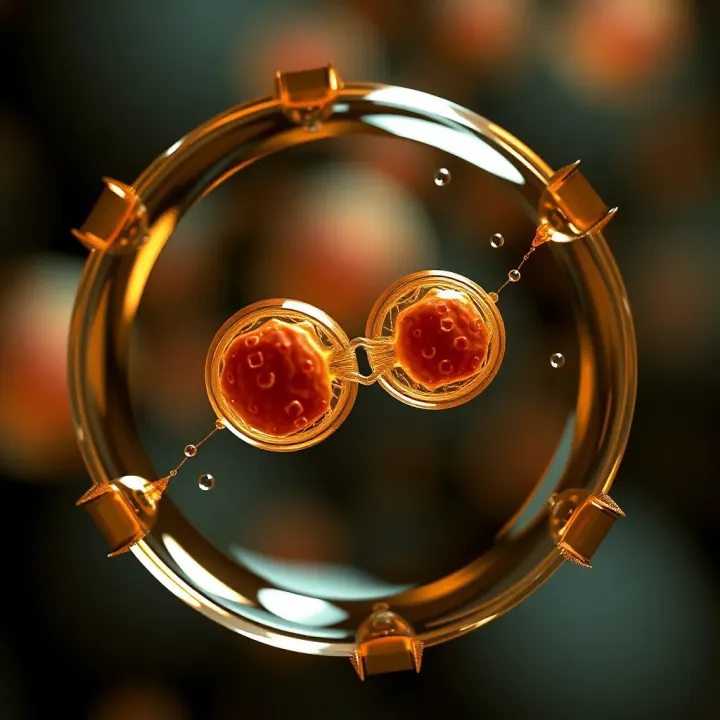
After replication, the cell elongates to prepare for splitting. The two DNA molecules move to opposite ends of the cell, creating space for division. The cell membrane starts to pinch inward, forming a septum that eventually divides the cell into two parts. This elongation is necessary to give each daughter cell enough room and resources to survive. In practical terms, this explains how bacterial cultures can expand quickly even under limited nutrient conditions.
Finally, the septum completes division, resulting in two genetically identical daughter cells. Each new cell maintains the same DNA as the original, which facilitates quick growth but limits genetic diversity. This is why bacteria rely on occasional gene transfer methods like conjugation to introduce variation. These identical daughter cells can then repeat the process, doubling the population effectively.
Binary fission is most commonly observed in bacteria, where efficiency and speed matter. For example, Staphylococcus aureus divides roughly every 30 minutes under ideal conditions, contributing to its rapid spread in infections. The process is relatively simple due to their lack of complex structures, focusing mainly on DNA replication and membrane division.
In protozoa like Amoeba, the process more complexly involves organelles along with the DNA. They not only replicate genetic material but also cytoplasmic content to ensure each cell functions independently post-division. This variation allows protozoa to survive in diverse environments, from stagnant water to human intestines, unlike many bacteria restricted to simpler conditions.
The way binary fission unfolds highlights its role in both fast reproduction and potential limits due to genetic uniformity, which can affect adaptability in changing environments.
By understanding these mechanics and variations, we see how this simple process shapes biological populations and influences practical fields like agriculture, medicine, and environmental management in Pakistan and beyond.
Binary fission allows single-celled organisms to multiply rapidly, often doubling their population in a matter of minutes or hours. This quick reproduction is particularly important for bacteria which can exploit favourable conditions without any delay. For example, during warm and nutrient-rich conditions in soil or water, bacteria such as Escherichia coli can reproduce quickly to increase their numbers and colonise the environment efficiently.
This rapid multiplication also supports the survival and continuation of species in fluctuating environments. Since binary fission does not require a partner, organisms like protozoa can reproduce independently, ensuring that even isolated individuals contribute to the population growth. In agricultural settings, this helps some microbes break down organic matter quickly but also poses challenges when harmful bacteria multiply rapidly on crops or in livestock.
Environmental adaptation through binary fission is subtle but critical. Because the organisms reproduce swiftly, their populations can adjust to changing surroundings by exploiting available resources almost instantly. If a new nutrient source appears in a pond or on a plant, bacterial populations can swell to take advantage of it before competitors do. This adaptability benefits ecosystems by maintaining microbial balance and nutrient cycling.
Furthermore, some bacteria can enter dormancy during stressful conditions, then use binary fission to bounce back fast when circumstances improve, such as after rains or temperature shifts. This ability to respond quickly to the environment highlights binary fission’s role beyond mere reproduction — it also supports ecological resilience.
Binary fission impacts ecosystems by controlling microbial populations that serve as the base of many food chains. For instance, in Pakistan’s freshwaters, bacteria reproduce through binary fission to break down organic waste, supporting larger aquatic life forms. The speed of this process ensures the removal of harmful substances and sustains water quality.
On the flip side, fast reproduction of harmful microbes also causes challenges. Pathogenic bacteria use binary fission to spread infections rapidly within human hosts. Take tuberculosis or cholera bacteria — their ability to multiply quickly makes infections hard to control without timely medical intervention. Thus, understanding binary fission helps health professionals manage outbreaks more effectively.
Rapid population growth through binary fission is a double-edged sword: it benefits ecosystems and biotechnology but demands cautious management in public health arenas.
In medical research, this knowledge aids in developing antibiotics that target bacterial division stages, aiming to slow or stop reproduction. It also informs vaccine development and infection control strategies, which are vital for Pakistan’s healthcare system battling bacterial diseases.
Overall, binary fission’s significance stretches from natural ecosystems to human health, underlining why grasping its mechanics is valuable for both science and daily life.
Binary fission is a straightforward method of cell division, mostly occurring in prokaryotic organisms like bacteria. Unlike mitosis and meiosis, which happen in eukaryotic cells, binary fission results in two genetically identical daughter cells. This means no genetic shuffling takes place, so the offspring are clones of the parent. In contrast, mitosis also produces identical cells but occurs in multicellular organisms for growth and repair. Meiosis, on the other hand, produces genetically varied cells called gametes, crucial for sexual reproduction.
This difference in genetic outcomes matters practically because binary fission supports rapid population growth but limits genetic diversity, affecting long-term adaptability. For farmers or health professionals dealing with bacteria or protozoa, understanding this helps predict patterns in microbial growth or resistance. Meanwhile, knowledge of mitosis and meiosis is essential in studies related to plant growth, human health, and breeding programmes.
In terms of complexity and speed, binary fission is far simpler and quicker. It doesn't require the complex stages seen in mitosis or meiosis, such as spindle fibre formation or chromosome alignment. This simplicity allows bacteria to reproduce rapidly—some species can divide every 20 minutes under ideal conditions. Mitosis and meiosis take longer, involving multiple controlled steps to ensure accurate chromosome distribution.
For those working in microbiology or biotechnology, this difference affects how cultures are handled and how experiments are timed. Rapid binary fission demands precise monitoring to avoid overgrowth, while studies of mitosis and meiosis require more complex setups and longer durations.
Budding is another asexual reproduction form that shares some features with binary fission, but with distinct differences. In budding, a small growth or "bud" forms on the parent organism and eventually detaches to become a new individual. Yeast cells and Hydra are common examples using budding. While binary fission splits the cell into two equal parts, budding produces offspring that initially remain attached and often smaller than the parent.
Understanding budding helps in industries like fermentation, where yeast multiplication is critical. Since budding allows gradual increase in population size, it complements processes that rely on controlled growth rather than rapid explosion.
Fragmentation involves an organism breaking into several pieces, each capable of developing into a full individual. This is common in some marine animals and fungi. While binary fission produces two offspring from one parent cell, fragmentation can result in multiple new individuals, depending on the number of pieces formed.
This method highlights how some organisms adapt to their environment by ensuring survival through multiple parts. For researchers studying population dynamics or regenerative biology, fragmentation offers insights into resilience mechanisms which differ from the rapid cloning seen in binary fission.
Unlike sexual reproduction, these asexual methods — binary fission, budding, or fragmentation — prioritise speed and replication of identical genetic material, shaping how organisms survive and proliferate under stable conditions.
In summary, comparing binary fission to other cell division and asexual reproduction methods reveals differences in genetic diversity, complexity, and growth pace. These distinctions matter not just for understanding biology but also in practical fields like agriculture, healthcare, and research involving microbial cultures or organism propagation.
Binary fission, while an efficient and straightforward method for reproduction, has several limitations that affect the organisms relying on it. Understanding these challenges provides insight into why some organisms have evolved more complex reproductive strategies.
Lack of variation: Binary fission produces two daughter cells that are genetically identical to the parent. This process does not involve gene mixing or recombination, which limits genetic diversity within the population. In practical terms, populations formed by binary fission are less able to adapt quickly to changing environments. For example, a bacterial colony reproducing solely through binary fission may struggle to survive sudden shifts in temperature or the introduction of antibiotics because all individuals carry the same genetic makeup.
Evolutionary implications: The absence of genetic variation means evolutionary changes happen slowly in organisms relying on binary fission. Without new genetic traits arising regularly, these populations have fewer options for natural selection to act upon. Over time, this can make them vulnerable to extinction if environmental conditions become unfavourable. However, some bacteria can exchange genetic material through processes like conjugation or transformation, partially offsetting this limitation by increasing variation without sexual reproduction.
Suitability to simple environments: Binary fission works best in stable and simple environments where conditions do not fluctuate wildly. In such settings, rapid reproduction provides an advantage by quickly populating available niches. For instance, in nutrient-rich environments like stagnant water or nutrient media in labs, bacteria multiply rapidly by binary fission. Yet, in more complex or variable habitats, relying only on this method can be problematic because it limits the population’s ability to respond to environmental challenges.
Effects of stress and damage: Environmental stresses such as UV radiation, toxins, or sudden changes in pH can damage the DNA or cellular structures during binary fission. Since there is no mechanism in binary fission to repair or reshuffle genetic material during division, these damages can pass to daughter cells intact, compounding over generations. This increases the risk of genetic errors and may reduce the viability of future populations. As a result, organisms that depend solely on binary fission must often endure or avoid stressful environments to survive long-term.
While binary fission is a quick and energy-efficient way to multiply, its challenges around genetic diversity and environmental sensitivity highlight why it mainly suits simple organisms in consistent habitats.
By recognising these limits, educators and researchers in Pakistan can better explain why some microbes are highly resilient yet others face extinction risks despite their fast reproduction abilities.
Understanding binary fission is more than just a biological curiosity; it has significant practical uses in both research and education. Grasping how single-celled organisms reproduce helps scientists cultivate bacteria efficiently and supports genetic studies that have real-world benefits.
Culturing bacteria is a prime example where binary fission knowledge is essential. Since bacteria reproduce rapidly through binary fission, laboratories can grow large bacterial colonies in a short time by controlling the environment. This process is vital for producing antibiotics, vaccines, and enzymes. For instance, pharmaceutical companies rely on bacterial cultures to manufacture insulin, which saves lives worldwide.
In lab settings, understanding the timing and stages of binary fission helps researchers optimise growth conditions and avoid contamination. Scientists can predict bacterial growth patterns and intervene when necessary, which is crucial during outbreaks of infectious diseases.
Genetic studies use binary fission to explore mutation rates and gene function. Since binary fission results in genetically identical daughter cells, any variations arise from mutations or external influences, making bacteria ideal subjects for genetic experiments. Pakistani research institutions often study antibiotic resistance by monitoring how bacterial populations change over generations, offering insights to tackle public health challenges.
Moreover, recombinant DNA technology frequently uses bacteria to clone genes. By inserting foreign DNA into bacteria, researchers exploit binary fission to produce many copies of a gene, facilitating detailed analysis or protein production.
Understanding basic biology starts with simple processes like binary fission. It provides students with a clear example of cell division, reproduction, and the continuity of life. Schools in Pakistan introduce this concept to show how even tiny organisms maintain life cycles, linking microscopic events to everyday realities like infections or yoghurt fermentation.
Using binary fission as a teaching tool helps students grasp broader topics like genetics and evolution. Practical activities, such as observing bacterial growth on petri dishes, bring these ideas to life and build foundational knowledge for biology and biotechnology fields.
Relevance to Pakistani curriculum is significant because the topic features in matriculation and intermediate biology syllabuses. Boards like Punjab and Sindh include it to prepare students for medical and scientific careers. The emphasis on binary fission also supports subjects that lead to competitive exams like MDCAT or ECAT.
Additionally, teaching binary fission aligns well with Pakistan's growing focus on STEM education. Introducing basic microbiology concepts early inspires students to consider careers in health sciences, agriculture, and research institutions within the country.
Binary fission knowledge bridges theory and practice, providing crucial understanding for biotechnology innovations and shaping Pakistan's future scientists and educators alike.
Key practical applications:
Mass culturing of bacteria for pharmaceuticals
Genetic research into mutations and cloning
Educational benefits:
Clear foundation in cell biology
Alignment with Pakistani academic standards
Explore the world of binary 💻 – understand its basics, how it powers computing, handles data, and why it’s vital in today’s digital tech. 💡📊

Learn how binary converters work 🔢 and why they matter in computing and daily tech 📱. Clear, practical guide for all readers, including Pakistan 🇵🇰.

Explore the basics of binary codes 💻, their history, types, and role in computers & data communication 📡 with practical insights on error detection and coding.

Explore the basics and uses of the binary alphabet 0️⃣1️⃣, key to digital communication and computing tech, vital for Pakistan's digital growth.📱💻
Based on 11 reviews