

Benefits of Risk Management for Businesses
Discover how risk management boosts business decision-making, financial strength, compliance, and reputation for steady growth 📈🔍💼
Edited By
Daniel Foster
Every project carries a degree of uncertainty that can impact its success. Managing these risks effectively helps keep projects on track, within budget, and aligned with goals. This section gives you a snapshot of the project risk management process, tailored for professionals handling projects in Pakistan’s diverse business and financial climate.

Project risk management involves identifying potential problems before they occur, assessing their impact, planning ways to reduce or avoid them, and monitoring throughout the project lifecycle. Unlike guessing, it’s a structured approach that helps you prepare for the unexpected.
In Pakistan, challenges like regulatory changes, inflation spikes, and energy shortages often affect project outcomes. For example, a construction project in Karachi may face sudden loadshedding that delays work, or fluctuating material prices in Lahore can push costs beyond estimates. Recognising these risks early allows better budgeting and contingency plans.
Ignoring risks can lead to cost overruns, missed deadlines, and poor quality — all eroding stakeholder confidence.
Risk Identification: List all possible threats to the project, including financial, technical, operational, and external factors.
Risk Analysis: Evaluate how likely each risk is and how severe its impact could be. For instance, a delayed payment from a client in Islamabad might hold up resources.
Risk Response Planning: Decide on strategies such as avoiding, transferring (through insurance), mitigating, or accepting risks.
Risk Monitoring and Control: Track identified risks and spot new ones during execution. Adjust plans as situations change.
This cycle repeats as projects evolve. Staying engaged with the risk process means you handle surprises better and protect project investments.
By applying these practical steps, project managers, traders, investors, and analysts can ensure smoother progress and greater chances of success even amid Pakistan’s economic and operational challenges.
Understanding project risk is vital for any project aiming for success, especially in Pakistan's dynamic business environment. Risks are uncertainties that can affect the project’s objectives, either by causing delays, increasing costs, or damaging quality. Realising what risks are and how they impact your project helps you prepare better and avoid unpleasant surprises.
What constitutes a risk in projects? In practical terms, risk refers to any event or condition that might happen and negatively affect the project goals. For example, a supplier in Karachi might delay delivering critical materials due to loadshedding, which can stall the whole schedule. These are not just problems you spot after they happen, but potential issues that you can identify beforehand.
Difference between risks and issues is an important distinction. Risks are about the future — what might go wrong, while issues are problems actually happening now. Suppose your project team encounters sudden labour strikes; that’s an issue requiring immediate resolution. Risks require planning to avoid or lessen their impact, whereas issues demand prompt action to fix.
Types of risks in project environments vary widely. They can include:
Technical risks, like software bugs affecting an IT project in Islamabad.
Financial risks, such as unexpected currency devaluation impacting procurement costs.
Operational risks, for instance, unreliable transport causing delays in raw material delivery.
External risks, including government policy changes or political instability, which are quite relevant in Pakistan.
Each type requires specific attention depending on project context.
Impact of risks on project success is often underestimated. For example, if a construction project in Lahore does not account for monsoon seasons as a risk, it can face flooding and delays, threatening overall completion. Identifying risks early helps you spot potential roadblocks and plan accordingly, making your project resilient.
When it comes to cost, time, and quality implications, risks can inflate budgets, push deadlines, or reduce the quality of outcomes. Imagine a software firm in Karachi facing internet outages affecting communication with offshore teams; this can extend deadlines and raise costs if not managed properly.
The benefits of a structured risk approach are clear. Having a solid process to identify, analyse, and respond to risks gives the project team confidence and control. It prevents rash decisions when problems arise and ensures resources are directed where they are needed most. This approach not only safeguards investment but also enhances trust among stakeholders.
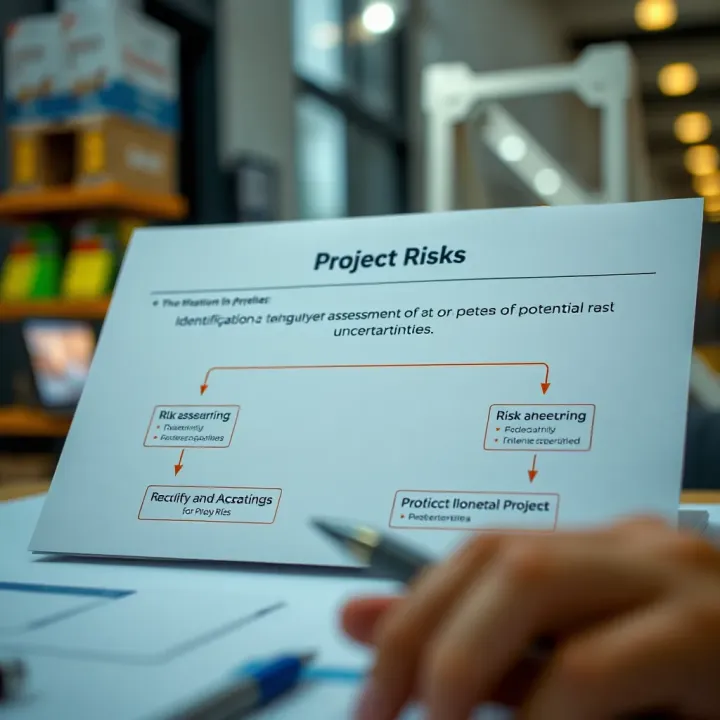
Managing risks effectively isn't just a good practice in Pakistan’s fluctuating market — it’s essential for project survival and success.
By understanding the nature of project risks and their impact, Pakistani professionals can make better decisions and deliver projects that meet expectations despite challenges.
Understanding the steps in project risk management helps professionals tackle potential problems before they affect timelines, costs, or quality. Following a clear process ensures risks are identified early, analysed properly, and dealt with efficiently. This is especially relevant for Pakistan’s diverse projects, from infrastructure to software development, where unforeseen issues often arise.
Risk identification reveals uncertainties that could derail a project. Common techniques include brainstorming sessions, checklists tailored to Pakistan’s market conditions, and reviewing past projects to spot frequent pitfalls. For example, in construction projects, unexpected monsoon flooding risks can be identified by analysing seasonal data and local experience.
Engaging project stakeholders is vital in gathering diverse perspectives. Engineers, vendors, clients, and labour representatives can highlight risks that a single team might overlook. Involving stakeholders early creates ownership and ensures risks are not missed due to communication gaps.
Documenting identified risks in a risk register keeps information organised and accessible. Each entry should describe the risk, its possible causes, and potential effects. This written record allows the team to track risks systematically and revisit their status during the project lifecycle.
Qualitative analysis sorts risks by their nature and seriousness using expert judgment, while quantitative analysis applies numerical methods to predict potential outcomes. Pakistani projects with limited data might rely more on qualitative approaches initially, shifting towards quantitative analysis as more information accumulates.
Assessing likelihood and impact means estimating how probable each risk is and how badly it could affect the project. For instance, a critical supplier delay might have a high impact but moderate likelihood. Accurate assessment guides where to focus attention and resources.
Prioritising risks ensures the team tackles the most threatening issues first. Using tools like a risk matrix, risks that are both highly likely and severe get top priority. This focus maximises project resilience given limited budgets and tight schedules often seen in Pakistani industries.
Selecting appropriate responses depends on the nature and priority of risks. Options include reducing risk severity, avoiding the risk, transferring responsibility through contracts, or accepting minor risks. Each choice demands understanding the project's goals and constraints.
Mitigation reduces impact or likelihood, while avoidance changes plans to bypass risk. Transferring risk might mean insurance or subcontracting, and acceptance involves monitoring without immediate action. For example, in software projects, acceptance might apply to minor bugs scheduled for later fixes.
Allocating resources and responsibilities makes sure the risk response plans are actionable. Assigning team members to oversee specific risks, budgeting for mitigation activities, and setting deadlines ensure accountability and progress.
Tracking risk status throughout a project keeps the team aware of evolving threats. Regular risk reviews, status meetings, and updates help detect new risks or changes in existing ones.
Updating risk registers reflects the current situation, including mitigation success and any changes in risk priority. This living document guides decision-making as the project moves forward.
Adjusting responses as needed means revising plans if initial measures prove insufficient or if circumstances shift. Flexibility in risk management is essential in Pakistan’s dynamic business environment, where political or economic factors can alter project conditions suddenly.
Effective risk management is not a one-time task but a continuous cycle of identification, analysis, response, and monitoring. Sticking to these steps helps Pakistani project managers keep challenges in check and improve the chance of success.
Effective project risk management depends not only on recognising risks but also on applying the right tools and techniques to control them. These instruments help project managers in Pakistani contexts to organise information clearly, engage stakeholders systematically, and ensure risks receive appropriate attention throughout the lifecycle. Without such tools, risk identification and response can become haphazard, leading to missed signals and unmanaged consequences.
A risk register is fundamental for documenting all identified risks, along with their characteristics and planned responses. Typically, it includes risk descriptions, causes, likelihood, impact, and assigned owners. For example, in a Karachi-based construction project, a risk register may list site flooding as a risk, assess its impact on timelines, and assign the project engineer responsibility for monitoring weather reports. Maintaining such a register ensures nothing slips under the radar and facilitates transparent tracking.
Alongside this, a risk matrix helps prioritise risks by plotting their likelihood against impact on a grid. This visual tool simplifies decision-making, enabling teams to focus on risks that threaten critical project elements. For instance, a software development project in Lahore may find a low-probability risk with a high financial impact ranked alongside more frequent but minor issues, allowing managers to allocate resources accordingly. The risk matrix brings objectivity and clarity to prioritising efforts.
Brainstorming sessions foster open discussion among team members and stakeholders to surface hidden or unexpected risks. Facilitating these sessions effectively involves setting a clear agenda, encouraging all voices, and avoiding criticism during idea generation. For example, an energy sector project in Islamabad might gather design engineers, contractors, and local authorities to brainstorm potential regulatory risks. This process diverges from routine reports by capturing diverse perspectives and fresh insights.
Complementing brainstorming, expert judgment draws on the experience of specialists to evaluate risks realistically. Involving experts familiar with Pakistan’s regulatory environment or supply chain challenges lends credibility and depth to risk assessments. For instance, consulting a seasoned procurement officer for a textile export project ensures accurate identification of vendor-related risks and practical mitigation strategies. Combining expert input with team brainstorming produces a well-rounded risk profile.
Several modern software tools are increasingly suited to Pakistani projects, blending local requirements with user-friendly features. Tools such as Microsoft Project, Primavera, and specialised risk management software like RiskyProject offer tracking, reporting, and alerts that integrate with project schedules. These applications help project managers maintain up-to-date risk registers and generate actionable reports quickly.
Digital risk tracking brings clear benefits: it reduces manual errors common in spreadsheet-based systems, supports real-time updates from remote sites, and enables trend analysis over multiple projects. In Pakistan’s frequent load-shedding scenarios, cloud-based tools allow teams to continue monitoring risks despite power interruptions. Moreover, automated reminders assist teams in following up on risk responses punctually, enhancing overall control.
Practical tools and tailored techniques simplify managing how risks are handled, allowing Pakistani project teams to concentrate more on delivery and less on administrative burdens.
Understanding common challenges in project risk management is essential to improving project outcomes consistently. These challenges often stem from human factors, organisational culture, and resource constraints that hinder effective risk handling. Addressing these issues empowers project managers and teams to anticipate risks better, allocate resources wisely, and engage stakeholders constructively. Below, we break down key hurdles and offer practical solutions relevant in Pakistan’s dynamic project environment.
Building a risk-conscious culture is the foundation for successful risk management. Many projects falter because teams treat risk identification as a one-time activity rather than an ongoing mindset. Leaders must embed risk awareness into everyday operations by encouraging open dialogue on uncertainties. For instance, at a Karachi-based construction firm, regular morning meetings now include a quick risk update, helping workers spot potential issues early. Such practices foster attentiveness and reduce surprises downstream.
Training project teams effectively goes beyond standard workshops. Tailored training sessions that reflect the specific projects, industries, and local challenges ensure team members grasp risk concepts meaningfully. For example, software teams working on fintech startups in Lahore benefit from scenario-based training that simulates cybersecurity threats unique to Pakistan’s digital landscape. Continuous refresher courses and hands-on exercises reinforce learning, making risk management second nature.
Ensuring collaboration across departments is vital because risks rarely respect organisational boundaries. In many Pakistani projects, siloed work cultures lead to missed signals and delayed action. Breaking down barriers through cross-functional teams helps pool diverse insights. For example, a manufacturing plant in Faisalabad involves procurement, operations, and finance from the start to detect supply chain risks early.
Communication strategies play a key role in maintaining stakeholder engagement. Clear, consistent updates tailored to each group's interests keep everyone informed and accountable. Using simple language and visual tools like risk dashboards aids comprehension for non-technical stakeholders in government or community projects. Frequent check-ins also encourage feedback that can refine risk responses as conditions change.
Allocating budget for risk activities is often seen as a luxury in tightly budgeted projects, yet ignoring it can cost far more later. Allocating even a small percentage of the overall budget—for example, 3-5%—for risk assessment and mitigation pays off by avoiding costly overruns or failures. A telecom rollout in Islamabad dedicated funds for additional site surveys and risk inspections, preventing network outages due to unforeseen terrain challenges.
Prioritising critical risks amid constraints requires discipline and clarity. Not every risk can be managed equally when budgets and time are tight. Using tools like the risk matrix helps focus efforts on the highest-impact, most likely risks first. Pakistani firms dealing with fluctuating currency rates often prioritise financial risks, while construction companies highlight safety hazards and regulatory compliance. This clear prioritisation drives efficient use of limited resources.
Addressing these challenges through practical measures helps transform risk management from a checkbox exercise into a dynamic, value-adding process that enhances project success in Pakistan’s complex environments.
This section highlights common pitfalls Pakistani project managers encounter and offers actionable tips to overcome them, ensuring your risk management approach is both realistic and effective.
Discover how risk management boosts business decision-making, financial strength, compliance, and reputation for steady growth 📈🔍💼

📊 Discover how actuarial science helps assess and manage financial risks in insurance and finance, tailored for professionals and students in Pakistan.

Learn the basics of binary addition with easy rules ✅, examples, common challenges, and tips that highlight its role in computing & electronics 💻⚡.

Explore how the decimal 100 converts to binary and why this matters in computing 💻. Learn the process and real-world uses of binary coding.
Based on 6 reviews